




Workplace Temperature Mandate Fuels Frustration as Testimony Highlights Disconnect

Workplace Temperature Mandate Fuels Frustration as Testimony Highlights Disconnect

The House General and Housing Committee took testimony this week on proposed “extreme temperature” workplace provisions in S.230, drawing strong opposition from Vermont employers and underscoring a growing disconnect between the proposal and real-world workplace conditions.

The language under consideration originated as a standalone proposal that did not advance by crossover and is now being reviewed for inclusion in a Senate bill. As drafted, it would establish new regulatory requirements across a wide range of industries and work environments, significantly expanding employer obligations.

A coalition of 20 Vermont-based employer organizations submitted a joint letter outlining concerns with the scope and structure of the proposal. The letter emphasized the difficulty of applying a single, prescriptive framework across industries where work varies by location, season, and task.

Testimony from the Vermont Department of Labor provided important context. Data presented to the Committee showed that complaints related to temperature exposure are limited and, when they have been filed, have been investigated and addressed through existing workplace safety standards. In those cases, conditions were significantly more extreme than the thresholds outlined in the bill.

This distinction has become central to the discussion.

The proposal would trigger requirements at temperatures above 80 degrees and below 35 degrees, conditions that occur regularly in Vermont. As written, this would extend regulatory requirements into routine, day to day operations rather than focusing on more severe or hazardous conditions.

The structure of the proposal raises operational concerns. It requires continuous temperature monitoring at all worksites and in work vehicles, along with written, site-specific plans and new training and compliance obligations. For businesses that operate across multiple locations in a single day or rely on mobile crews, this would require constant updates, duplicative documentation, and additional administrative capacity to manage compliance in real time.

The bill’s treatment of vehicles and equipment is another point of concern. By defining vehicles as regulated workplaces and requiring temperature controls, including heating and, in some cases, air conditioning, the proposal extends requirements to equipment that is not designed to function as a climate-controlled environment. For many industries, compliance would require costly retrofits or replacement of equipment. In some cases, compliance may not be feasible.

Indoor businesses would face challenges as well. Requirements tied to temperature thresholds could affect restaurants, commercial kitchens, and other spaces that are not consistently climate-controlled or cannot maintain specific temperatures during peak operations.

The requirements would apply to state and municipal operations, extending the cost of compliance to taxpayers and public sector fleets across Vermont.

Employers pointed to existing workplace safety protections under the Vermont Occupational Safety and Health Administration and the federal Occupational Safety and Health Administration, noting that these frameworks already provide enforceable standards addressing workplace conditions, including environmental exposure.

The Committee’s focus on this proposal comes as Vermont continues to face significant economic challenges, including a well-documented housing shortage and workforce constraints, raising broader concerns among employers about legislative prioritization and the cumulative impact of new regulatory requirements on business operations.

CONNECT WITH OUR EMPLOYER MANDATES EXPERT

Megan Sullivan

Vice President of Government Affairs

Economic Development, Fiscal Policy, Healthcare, Housing, Land Use/Permitting, Technology
RECENT NEWS

Vermont Signature Events Award Winners Announced

Vermont Signature Events Award Winners Announced

The Vermont Chamber of Commerce and the Vermont Department of Tourism and Marketing have announced the winners for the 2026/27 Vermont Signature Events program. These signature events offer experiences that fuel the Vermont visitor economy. In 2024, visitor spending hit a record by contributing $4.2 billion to Vermont’s economy. 

2026/27 Vermont Signature Events: 

  • Hardwick State (April 17-19, 2026): For one weekend, Hardwick becomes a townwide university where community members teach and learn from one another. Anyone can be a teacher, and everybody is a student, with free or donation-based classes ranging from practical skills like tire changing and chainsaw repair to philosophy, crocheting, cake decorating, and improv comedy. 
  • Battenkill Fly Fishing and Art Festival (April 30–May 2, 2026): Held in Arlington, this three-day festival celebrates the spring-fed Battenkill River with speakers, workshops, fly-tyers, live music, a casting competition, a beer tent, and events centered on history, aquatic life, and sustainability. 
  • M&T Bank Vermont City Marathon & Relay Weekend (May 22–24, 2026): Vermont’s largest single-day sporting event takes over Burlington with a scenic, spectator-friendly marathon course, a sports and fitness expo, youth mini-marathons, and a lively post-race festival at Waterfront Park. 
  • Community Concerts on the Green (May 22–September 6, 2026): In Middlesex, Camp Meade hosts free live music every Friday and Sunday from Memorial Day through Labor Day, featuring local performers, art activities, artisan studios, food, drinks, and a relaxed community atmosphere. 
  • Naulakha Estate and Rhododendron Tour (June 5–7, 2026): Normally reserved for overnight guests, Rudyard Kipling’s historic Dummerston estate opens for self-guided tours, offering rare access to the grounds and the iconic rhododendron tunnel during peak bloom season. 
  • Jeezum Crow Festival (July 10–11, 2026): At Jay Peak Resort, this high-energy summer music festival features national and regional acts, local food and craft vendors, and a laid-back mountain setting. Past performers include Del McCoury, Dark Star Orchestra, and Yonder Mountain String Band. 
  • New World Festival (September 6, 2026): Downtown Randolph hosts this celebration of Celtic and Québécois traditional music and dance, with performances across five stages, street acts, called dances, kids’ activities, and food and drink from local vendors. 
  • Puppets in the Green Mountains (September 11–20, 2026): Based in Brattleboro, this biennial international festival showcases puppet theater for all ages through performances, workshops, and forums that emphasize creativity, compassion, and storytelling. 
  • Vermont Cheese Week (September 13–20, 2026): A statewide celebration featuring cheese-themed restaurant specials, farm tours, dinners, tastings, and special events that highlight Vermont’s award-winning cheesemakers and the landscapes behind their craft. 
  • Cores and Pours (September 18, 2026): In Woodstock, this evening event invites visitors to explore Vermont’s small-batch cider scene with guided tastings led by a local pommelier, meet artisanal cider-makers, and enjoy local food offerings. 
  • Rocktoberfest (September 26, 2026): Morrisville’s Portland Street transforms into a lively fall street festival with live bands, an Adirondack Chair Auction, dance performances, family activities, and food and retail vendors in a free, community-focused setting. 
  • Vermont Circus Festival (November 1–8, 2026): Presented in Brattleboro by the New England Center for Circus Arts, this weeklong festival features circus workshops, performances, community events, and multiple shows ranging from cabaret to experimental circus. 

The Vermont Signature Events program offers an invaluable opportunity for events to garner widespread recognition. Signature events are awarded annually and showcase the rich variety of experiences to be had in the Green Mountains. These top-rated events offer a true taste of all that is local, bringing visitors into the heart of communities and serving as an important component in the Vermont visitor economy. 

Learn more about the Vermont Signature Events program and access the 2027/28 application here.

Senate Lawmakers Focus on Economic Development Tools and Strategy

Senate Lawmakers Focus on Economic Development Tools and Strategy

The Senate Economic Development, Housing, and General Affairs Committee began work on an economic development bill this week that closely reflects priorities outlined in the Vermont Futures Project’s Economic Action Plan and aligns with the Vermont Chamber’s call for strategic, data-informed action to strengthen the state’s economy.

The committee bill proposes the creation of a Business Development Task Force, charged with identifying how Vermont can better support and enable business growth at all levels. In tandem, the Department of Economic Development (DED) and the Department of Tourism and Marketing (VDTM) are directed to review existing economic development tools at the state, regional, and national level, and to report to the task force how they are marketed to Vermont businesses. Not only could this review lead to a strengthening of opportunities for employers, but it also represents a substantive starting point for the task force to build on toward advancing much needed economic growth in Vermont. 

This proposed task force would include representatives from the Vermont Chamber and the Vermont Futures Project, pairing the Chamber’s statewide business leadership and policy engagement with the Futures Project’s data and research expertise to inform a coordinated economic development strategy. Over the course of its tenure, the task force could build on previous statewide studies and reports, including the Economic Action Plan, emphasizing regional coordination, modernized tools, and a strong workforce pipeline as key drivers of economic development. Ultimately, the task force would recommend future steps to improve access to capital, strengthen programs, and develop new tools that support long-term economic growth.

While Vermont faces ongoing economic headwinds, this effort shows that meaningful, bipartisan action is possible. As the Vermont Futures Project Competitiveness Dashboard notes, Vermont ranks last in the US for economic momentum. Businesses continue to feel the strain of an unstable economy. A focused, statewide approach to economic development is no longer optional.

Importantly, the bill doesn’t stop at the task force. It also:

  • Expands the Downtown Village Center Tax Credit Program, providing valuable funding for downtown revitalization.
  • Allocates funding to the Vermont Law and Graduate School’s business law center, providing businesses with expert legal aid.
  • Recommends additional funding for brownfield remediation, allowing continued housing redevelopment.
  • Repeals the sunset of the Vermont Employment Growth Initiative, preserving a cornerstone economic development tool.

At a time when other committees have prioritized employer mandates and regulatory expansions, the Vermont Chamber is enthusiastic about supporting the Senate Economic Development, Housing, and General Affairs Committee’s strategic, thoughtful, and pragmatic progress.

CONNECT WITH OUR ECONOMIC DEVELOPMENT EXPERT

Megan Sullivan

Vice President of Government Affairs

Economic Development, Fiscal Policy, Healthcare, Housing, Land Use/Permitting, Technology

RECENT NEWS

State of the State

State of the State

Governor Phil Scott’s State of the State on January 7 focused on education and Vermont’s affordability challenge, highlighting a growing disconnect between rising costs and student outcomes. With one-time federal funds exhausted and federal uncertainty looming, the Governor emphasized fiscal discipline, accountability, and implementation, particularly in education, as essential to restoring affordability and predictability. The message was clear: Vermont can no longer sustain rising costs without corresponding improvements in outcomes. 


As the Vermont Chamber has shared with members and communities statewide, the Vermont Chamber supports policy that leads to strategic growth of people and places. As the state’s largest business advocacy organization, we focus on turning planning into policy and policy into progress. Through the Vermont Economic Action Plan and a data-informed, member-driven legislative agenda, the Chamber continues to advance affordability, opportunity, and long-term economic resilience. 


Rising public costs, especially in education, show up in immediate and tangible ways for businesses. Higher property taxes, constrained housing supply, intensified workforce pressures, and increased difficulty planning for the future are now common challenges. The Governor’s call to complete education transformation aligns directly with the Chamber’s first legislative priority, Economic Abundance Through Fiscal Stewardship, recognizing that bending the cost curve frees up resources for housing, infrastructure, and tax relief. 


The State of the State made clear that achieving those outcomes will not be easy or smooth. The Governor underscored that completing Act 73, last year’s education reform law, requires meaningful structural change, including district mapping and governance reform. He emphasized that the current system was built for a Vermont that no longer exists and signaled a willingness to use veto authority if reforms stall. 


House Democratic leadership, speaking at a press conference, reinforced a shared focus on affordability, housing, health care, and public education, while signaling a more cautious approach to implementation. Speakers emphasized transparency, data review, and continued engagement with Vermonters, noting that many details remain under consideration as the session begins. 


Legislative leaders, while reaffirming support for Act 73 and education quality, offered responses that suggested less alignment on timelines and tools. Questions around district mapping, spending thresholds, and property tax relief highlighted early tension with the Administration’s insistence that maps be treated as an essential next step, rather than a longer-term consideration. 


While there is broad agreement that change is required, success this session will depend on moving beyond shared diagnosis to shared execution. Education costs ripple through property taxes, housing affordability, workforce availability, and long-term competitiveness, underscoring the Chamber’s priorities around workforce and housing alignment and industry competitiveness. 


SHARE THIS ARTICLE

RECENT NEWS

Vermont Tourism Summit Celebrates Industry Excellence and Innovation at 40th Annual Event

Vermont Tourism Summit Celebrates Industry Excellence and Innovation at 40th Annual Event
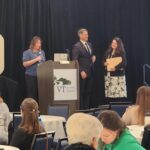
Outstanding achievements and innovations within Vermont’s tourism and hospitality sectors were honored at the 40th annual Vermont Tourism Summit. Several industry leaders received awards recognizing their exceptional contributions to community engagement, sustainability, the arts, and inclusive hospitality in Vermont.
Emerging Tourism and Hospitality Leaders: This recognition celebrates the innovative minds that represent the future of Vermont’s tourism and hospitality industries. These individuals bring fresh ideas, enthusiasm, and a forward-thinking approach to challenges and opportunities. This year’s recipient is Kelsey VonDerLinn, Director of Sales and Guest Services at ECHO, Leahy Center for Lake Champlain. Kelsey has spent the past decade contributing to the vibrancy of Burlington through her work at ECHO, where she quickly rose to the senior staff team. A University of Vermont graduate, Kelsey has become a trusted leader known for her collaborative spirit and commitment to enhancing the visitor experience. She played a key role in coordinating ABC’s national eclipse broadcast from ECHO, ensuring a seamless event for both the media and local guests. In addition to her work at ECHO, Kelsey serves on multiple boards and mentors future tourism professionals. Her dedication and vision continue to shape Burlington as a welcoming and dynamic destination.
Vermont Tourism Leadership Award: Honoring the outstanding achievements of leaders who have significantly contributed to the promotion and enhancement of tourism in Vermont, this year’s recipient is Jody Fried, Executive Director at Catamount Arts. Jody has played a central role in transforming St. Johnsbury into a vibrant arts and culture destination through his leadership at Catamount Arts. His commitment to inclusive community building and creative partnerships has positioned the Northeast Kingdom as a welcoming place for all. Jody has also served in statewide leadership roles, including chairing the Vermont Creative Network Steering Committee and participating in the Travel and Recreation Council. His visionary work continues to elevate regional tourism and the arts in Vermont.
Vermont Hospitality Excellence Award: This award honors a Vermonter who exemplifies exceptional service and excellence in culinary arts and hospitality. This year’s recipient is Matthew Robinson, Owner of Swift House Inn. Matthew has elevated the Swift House Inn in Middlebury through his commitment to inclusive hiring, community engagement, and environmental stewardship. With thoughtful updates to both the inn and its restaurant, he has preserved its historic charm while embracing modern culinary and sustainability practices. Known for his personal warmth and hospitality, Matthew has become a valued leader in Vermont’s hospitality landscape. His approach sets a standard for excellence, care, and long-term impact in the industry.
Award recipients were selected by a panel of judges representing the tourism and hospitality industry. Awards were presented by Karen Duguay, Senior Director of Programming at the Vermont Chamber of Commerce, Lieutenant Governor John Rodgers, and Heather Pelham, Commissioner of the Vermont Department of Tourism and Marketing. Learn more about the nomination process and award criteria at vttourismsummit.org/awards.html.

 

Tourism Economy Day Brings Business and Policy Leaders Together at the State House

Tourism Economy Day Brings Business and Policy Leaders Together at the State House

Over 100 tourism and hospitality industry leaders gathered at the State House on April 10 to engage with legislators and raise awareness of the collective contributions of these industries to the Vermont economy. Tourism Economy Day, convened by the Vermont Chamber of Commerce, Ski Vermont and Vermont Specialty Food Association, brought businesses together to advocate for a thriving Vermont visitor economy.

The Vermont visitor economy has a $4 billion annual economic impact and represents 10% of our workforce. In 2023 alone, 15.8 million visitors spent $4.0 billion across lodging, dining, retail, entertainment, recreation, and more. Their spending also contributed $282.3 million in state and local taxes—equivalent to approximately $1,039 per Vermont household. Businesses, legislative leaders, and Administration officials collaborated for a day of advocacy that elevated the collective contributions of the visitor economy to Vermont. Advocacy day highlights included a joint hearing with the Senate Committee on Economic Development, Housing and General Affairs and House Committee on Commerce and Economic Development, a joint resolution recognizing April 10, 2025, as Tourism Economy Day, and an evening food and beverage tasting reception with the Vermont Specialty Food Association.

Rep. Abbey Duke (Chittenden-17), a stalwart supporter of the tourism industry, shared “Vermont’s tourism sector is a cornerstone of our state economy, generating billions in economic activity, supporting tens of thousands of jobs, and enriching our communities. It’s essential for legislators to support policies that foster sustainable growth in tourism, including investments in infrastructure, housing, workforce development, and supporting local businesses.”

“A thriving tourism economy means vibrant communities and a chance for everyone—whether you’re a local or a visitor—to experience the very best of Vermont. However, the industry is facing challenges echoed by so many across the state: an aging declining workforce and a critical housing shortage.” said Amy Spear, President of the Vermont Chamber of Commerce. “It’s crucial that we find a path towards affordability and abundance, improving economic conditions. Vermont’s beauty and charm are undeniable, and together, we can create an environment where both our tourism industry and our communities can thrive for generations to come.”

Business leaders highlighted the following sentiments in their testimonies: the role of tourism supporting Vermont’s economy and communities, the industry’s centrality in providing jobs and making Vermont an appealing destination to both live and visit, and the collective challenges facing businesses in the industry, including: workforce shortages, workforce housing accessibility and affordability, rising taxes and high operating costs and a strained relationship with Canadian neighbors due to federal rhetoric.

“Outdoor recreation is a significant part of Vermont’s tourism economy, driving visits and fueling the economy in many rural parts of our state. In 2023, outdoor recreation accounted for 4.8% of the state’s GDP, or $2.1B annually, and 5.1% of the state’s workforce, according to the US Bureau of Economic Analysis,” said Molly Mahar, President of Vermont Ski Areas Association. “Vermont ranks second only to Hawaii in percent of GDP generated by outdoor recreation, which is largely driven by activities like skiing, snowboarding, hiking, mountain biking, and camping. However, businesses are grappling with workforce and housing shortages, higher costs, and new uncertainty around Canadian visitation levels, which limit growth.”

Additional business and policy leaders that testified were Nina Ridhibhinyo, Director of Programs & Strategy at ECHO, Leahy Center for Lake Champlain, Randy George, Owner of Red Hen Baking Co., Québec Delegate Rene Sylvestre of the Québec Government Office in Boston, Will Kriewald, CEO of Basin Harbor Resort and Boat Club, Abby Long, Executive Director of Kingdom Trails, Kate Trzaskos, Executive Director of Downtown Brattleboro, Vicky Allard, Founder and Executive Chef at Blake Hill Preserves, Steve Wright, President/General Manager at Jay Peak Resort, and Kim Jackson, Director of Communications and Marketing at Vermont Adaptive.

The day ended with a Vermont Specialty Food Association Legislative Tasting, featuring vendors from across Vermont. Karin Cioffi, Executive Director of VSFA shared, “Vermont’s specialty food and beverage producers are a cornerstone of the state’s identity and a driving force behind the visitor experience. Tourists don’t just come for the views, they come to taste Vermont. From handcrafted cheeses to small batch spirits, these products represent the passion, innovation, and resilience of our local businesses. Our evening tasting event at the State House showcased the incredible talent of producers across the state and underscored just how vital this industry is to Vermont’s economy, culture, and continued appeal as a destination.”

Photo Credit for Images 3 and 4: Blake Hill Preserves

Vermont Signature Events Award Application Open

Vermont Signature Events Award Application Open

The Vermont Chamber of Commerce and the Vermont Department of Tourism and Marketing (VDTM) have announced the opening of the application for the .2026/27 Vermont Signature Events program.

The Vermont Signature Events program offers an invaluable opportunity for events to garner widespread recognition. Signature events are awarded annually and showcase the rich variety of experiences that can be had in the Green Mountains. These top-rated events offer a true taste of all that is local, bringing visitors into the heart of our communities and serving as an important component in the Vermont visitor economy. In 2023, visitor spending contributed $3.0 billion to Vermont’s economy.

Eligible events must meet the following guidelines:

  • Event must take place for a specified and limited period of time.
  • Events can occur over a period of months (i.e., a special exhibit at a museum) or for just a few hours.
  • Events must have an end date.
  • If your business regularly produces events, the event must be above and beyond regular business offerings.
  • Event must be appropriate for out-of-state visitors as well as Vermont residents.
  • Event must showcase the unique character of Vermont.

Ten award recipients will receive:

Events must take place between April 1, 2026, and March 31, 2027. The deadline to apply for the Vermont Signature Events program is October 31, 2025. Click here to submit an application.

The 2024 Vermont Inspiration Guide is Now Available, Celebrating Local Businesses and Green Getaways

The 2024 Vermont Inspiration Guide is Now Available, Celebrating Local Businesses and Green Getaways
The Vermont Chamber of Commerce and the Vermont Department of Tourism and Marketing (VDTM) have announced the release of the annual Vermont Inspiration Guide. The Vermont Chamber produces the Inspiration Guide in partnership with VDTM each year. Print copies of the 2024/25 edition are set to be distributed to key points of interest in Vermont’s drive market to amplify Vermont businesses and inspire travel. In 2023, visitor spending contributed $3.0 billion to Vermont’s economy.
The Inspiration Guide is displayed throughout Vermont in Welcome and Information Centers as well as lodging properties and tourism hubs. It is also displayed at key retail outlets, airports and travel hubs in New England and New York as well as consumer shows and events throughout the United States and Canada. It is available by request through mail worldwide. The Inspiration Guide is part of the Vermont Tourism Marketing Program, which leverages dynamic print and digital products to promote businesses to the 80 million people within a day’s drive of Vermont. The suite of products and services are the official fulfillment pieces for the State of Vermont.
Vermont’s local communities, businesses, and attractions create the fabric that makes up the Vermont brand. The editorial mission of the Inspiration Guide is to tell the story of Vermont through compelling, authentic content that inspires visitors. The Inspiration Guide amplifies business stories and the Vermont brand experience to the destination marketplace.
In addition to articles celebrating each of Vermont’s unique regions, the 2024/25 edition of the Inspiration Guide highlights Vermont’s commitment to destination stewardship and sustainable travel with articles on “green getaways,” a guide to hiking responsibly, and more.
The transformative power of experiences and how they contribute to the well-being of visitors is further underscored in the reoccurring “Love Where You Live” section, which features Izzy Johnson of Color the Valley, LLC (CTV), a Queer, BIPOC, and Women-Owned outdoor guiding company based in Burlington, Vermont. CTV specializes in bikepacking, backpacking, and hiking trips with an emphasis on Black, Indigenous and People of Color (BIPOC), and Queer communities.
Individuals, businesses, and organizations can obtain print copies of the 2024/25 Vermont Inspiration Guide, by visiting https://vermontvacation.com/request-information/.

Vermont Tourism Summit Celebrates Industry Excellence and Innovation at 39th Annual Event

Vermont Tourism Summit Celebrates Industry Excellence and Innovation at 39th Annual Event

Outstanding achievements and innovations within Vermont’s tourism and hospitality sectors were honored at the 39th annual Vermont Tourism Summit. Several industry leaders received awards recognizing their outstanding contributions to culinary arts, sustainable practices, community engagement, and the future of tourism in Vermont.

Emerging Tourism and Hospitality Leaders: This recognition celebrates the innovative minds that represent the future of Vermont’s tourism and hospitality industries. These individuals bring fresh ideas, enthusiasm, and a forward-thinking approach to challenges and opportunities. The 2024 honorees:

  • Tom Carton, Strategy and Operations Manager, Hello Burlington
  • Lisa Davis Mitchell, Executive Director, Town Hall Theater Middlebury
  • Nick Edwards, Social Media Manager, Hello Burlington
  • Mollie Faccio, Marketing Brand Manager, Woodstock Inn & Resort

Vermont Hospitality Excellence Award: This award honors a Vermonter who exemplifies exceptional service and excellence in the culinary arts and hospitality; Jeffrey Raymond Virge, Chef, Baker, and Manager at Wayside Restaurant, Bakery, and Creamery. Jeff has been a cornerstone of the Wayside since 1975, providing warm welcomes, cultivating local relationships, and offering farm-fresh dishes. His culinary talents have been nationally recognized on the Discovery Channel’s “Road Trip Show” and in the New York Times, and locally by Seven Days. Under his leadership, the Wayside’s maple cream pie was named “Vermont’s Iconic Pie” by the Food Network. Jeff’s dedication, hard work, and inspiration have made him a culinary gift to Vermont.

Vermont Tourism Leadership Award: Honoring the outstanding achievements of leaders who have significantly contributed to the promotion and enhancement of tourism in Vermont, this year’s recipient is Joe Carton, COO of Westport Hospitality. Joe’s career spans over 40 years, starting in ski industry group sales and leading to the management of multiple high-profile properties, including the state’s first LEED-certified hotel. Joe has been instrumental in establishing numerous initiatives and mentoring countless hospitality professionals. His retirement marks the end of an era, but his legacy will continue to benefit Vermont.

Award recipients were selected by a panel of judges representing the tourism and hospitality industry. Honorees for the 2025 awards will be recognized at the 40th Annual Vermont Tourism Summit which is scheduled for April 28-30, 2025 at Hotel Champlain in Burlington, Vermont. Learn more about the nomination process and award criteria at vttourismsummit.org/awards.html.
Photos courtesy of Bobbi LoCicero. 

Op Ed: Eclipsing 802,000: Making Vermont a Destination for a Lifetime

Eclipsing 802,000: Making Vermont a Destination for a Lifetime

This commentary is by Kevin Chu, Executive Director of the Vermont Futures Project, and Amy Spear, Vice President of the Vermont Chamber of Commerce

On April 8th, over 160,000 people visited Vermont to observe the solar eclipse. Vermont briefly surpassed the 802,000 population goal that the Vermont Futures Project set last year, and we saw a glimpse of the vibrancy that’s possible in our state. Our downtowns and villages were full of life, full of people engaging in commerce and connecting with communities.

When totality occurred, there was a palpable sense of shared humanity and joy. For three and a half minutes, it didn’t matter if the person next to you was a visitor or resident. It didn’t matter if they were rich or poor, what languages they spoke, the color of their skin, or who they loved. For three and a half minutes, we were all human. What we observed in the sky was rightfully described by many as a once-in-a-lifetime event. What happened on the ground doesn’t have to be. Vermont needs more people, and more people need Vermont, whether it’s for a day, a week, months, or years.

The Vermont Chamber of Commerce recently convened Tourism Economy Day at the State House to highlight the collective impact of the visitor economy. The industry accounts for $3 billion in spending and supports 35,000 jobs (11.5% of Vermont’s workforce). Tourism also plays a profound role in connecting people to places. It unlocks much of the economic activity and vibrancy we see in our rural communities – visitors develop an affinity for Vermont, and some dream of moving here. We can make those dreams a reality by welcoming them with open arms and continuing to leverage the strength of our tourism economy to attract future residents.

Yes, doing so will mean we need to build more homes. It can also mean rural revitalization that taps into existing capacity in areas of the state that have depopulated. More housing and more people can make Vermont more affordable. It means a more robust workforce, thriving businesses, and a growing tax base that can support vital programs and services. Schools can be full of children again, and children won’t be told they need to leave Vermont to be successful. Opportunities to live, work, and play in this great state will be more abundant. A growing economy means that more needs, of more people, are being met more of the time.

We can’t afford to let Vermont be a once-in-a-lifetime place. For once, let’s make it a place that anybody can choose for a lifetime. 

_________________________________________

About the Vermont Futures Project

The Vermont Futures Project is an independent non-partisan organization pursuing answers to their mission question: How can we use data to support the evolution of Vermont’s economy towards a thriving future full of opportunity for all?

About the Vermont Chamber of Commerce

The Vermont Chamber of Commerce is dedicated to advancing the Vermont economy. Trusted by the businesses that make living, working, and thriving in Vermont possible, we prioritize collaboration and uphold the core values that define our state. As the preeminent not-for-profit business organization, we advocate, build community, and provide resources for businesses statewide.