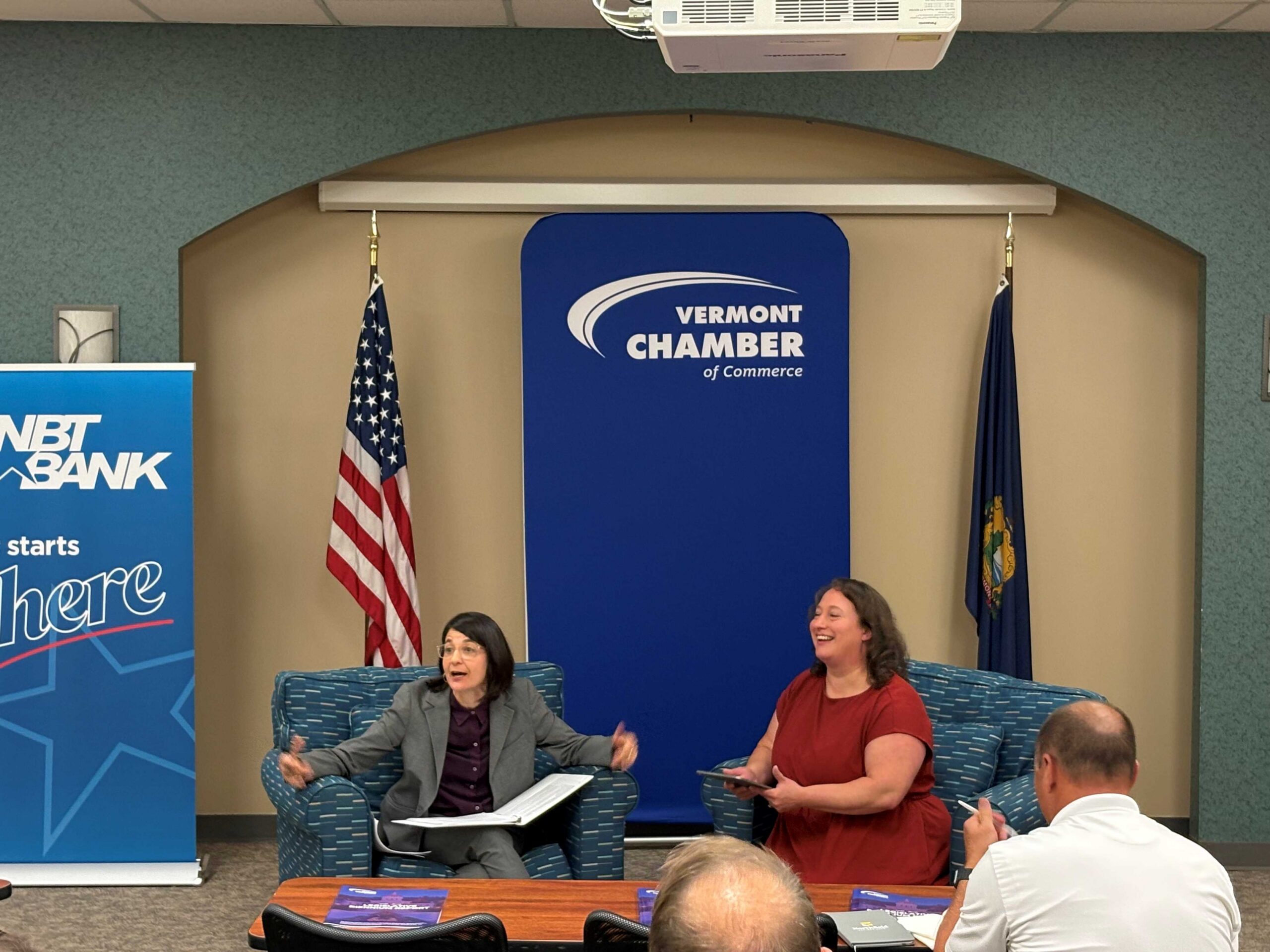
Vermont Chamber Releases 2025–2026 Legislative Biennium Report

Vermont Chamber Releases Legislative Biennium Report

Highlighting legislative outcomes, economic priorities, and opportunities to strengthen Vermont's competitiveness.

The Vermont Chamber of Commerce has released its 2025–2026 Legislative Biennium Report, documenting key policy outcomes, emerging economic priorities, and the growing role of data-informed decision-making in shaping Vermont’s future.

The report reflects on a legislative biennium defined by both progress and persistent challenges. While meaningful advances were made in areas such as housing, workforce development, healthcare reform, and economic development, affordability and competitiveness remain defining issues for Vermont’s future.

“This biennium marked an important shift in Vermont’s economic conversation,” said Amy Spear, President of the Vermont Chamber of Commerce. “There is growing recognition that Vermont’s challenges are interconnected. Housing, workforce, healthcare, demographics, affordability, and economic growth do not exist in silos. Solving them requires a shared vision, a commitment to facts, and the willingness to make long-term decisions that strengthen Vermont’s future.”

Over the past two years, the Vermont Chamber advanced policies focused on affordability, workforce development, housing, healthcare reform, economic development, and tax competitiveness. The report also reflects the growing connection between research and policymaking, informed by the Vermont Futures Project’s work to better understand Vermont’s workforce, housing, and economic challenges.

Through the Vermont Economic Action Plan, shaped by input from more than 5,000 Vermonters across all 14 counties, the Vermont Futures Project established a long-term blueprint to address Vermont’s workforce and housing challenges and strengthen economic competitiveness. New resources, including the Vermont Business Climate Survey and Competitiveness Dashboard, further expanded access to economic data and insights for policymakers, business leaders, and communities.

Highlights from the 2025–2026 Legislative Biennium Report include:

  • A Trusted Voice for Vermont Employers: The Vermont Chamber testified 87 times before legislative committees and monitored nearly 2,000 hearings throughout the biennium, bringing real-world business insight and economic expertise to policy discussions affecting employers across every sector and region of Vermont.
  • Affordability Takes Center Stage: Policymakers increasingly focused on the interconnected challenges of housing, workforce, healthcare, education, and economic competitiveness as Vermont’s affordability crisis emerged as a defining issue.
  • A Blueprint for Vermont’s Future: The Vermont Futures Project launched the Vermont Economic Action Plan, a long-term roadmap shaped by more than 5,000 Vermonters to address workforce shortages, housing constraints, and population growth.
  • Progress on Key Business Priorities: Meaningful advances were made in housing, healthcare reform, workforce development, economic development, and tax policy.
  • Preventing Additional Cost Burdens: Numerous proposals that would have increased costs for employers, consumers, and communities were defeated or improved through advocacy and stakeholder engagement.
  • Greater Transparency and Accountability: Legislative voting records on key economic issues provide employers and voters with a clearer understanding of where elected officials stand on policies affecting Vermont’s economy.

The report concludes that while important progress has been made, Vermont’s long-term success will depend on sustained leadership, collaboration, and a continued focus on affordability and economic growth.

“Data alone will not solve Vermont’s challenges, but good decisions begin with good information,” said Spear. “This report demonstrates the value of bringing together research, business insight, and public policy to create practical solutions. The work ahead will require persistence, partnership, and a shared commitment to building a more affordable, competitive, and prosperous Vermont.”

The full 2025–2026 Legislative Biennium Report is available here.

CONNECT WITH OUR TEAM

Jeff Wise

Senior Director of Programming

RECENT NEWS

2026 Vermont Inspiration Guide is Now Available, Celebrating Local Businesses and Unexpected Experiences

The 2026 Vermont Inspiration Guide is Now Available, Celebrating Local Businesses and Unexpected Experiences

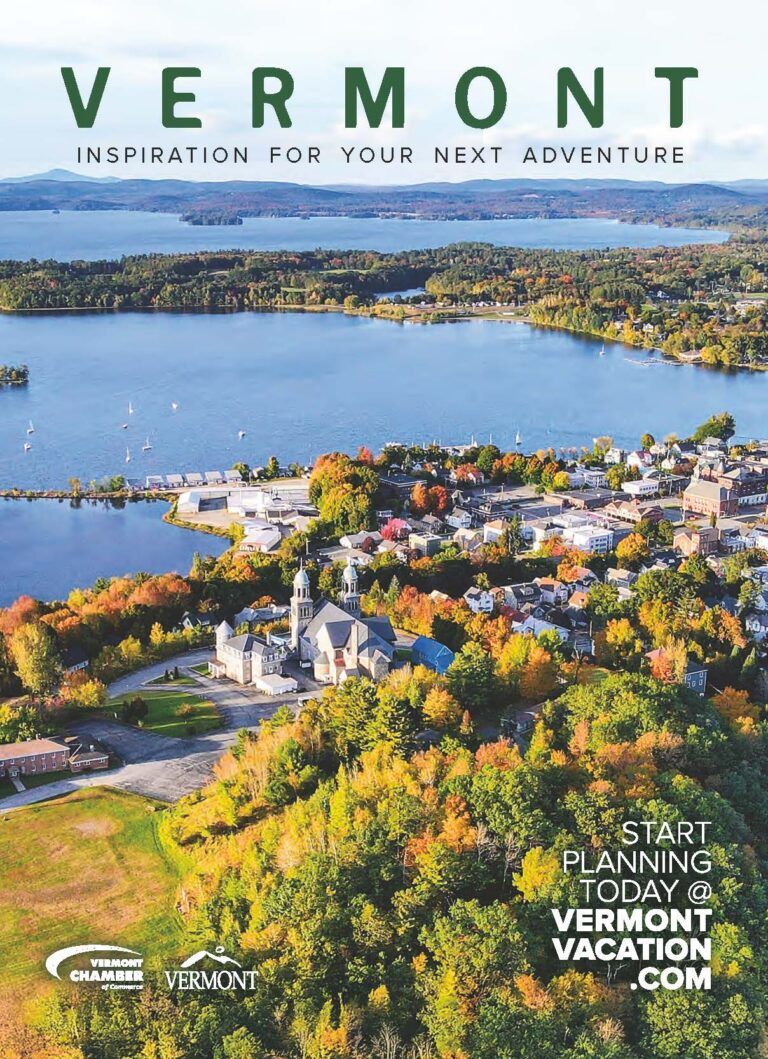
The Vermont Chamber of Commerce and the Vermont Department of Tourism and Marketing (VDTM) have announced the release of the annual Vermont Inspiration Guide, the state’s official travel publication. The Vermont Chamber produces the Inspiration Guide in partnership with VDTM each year. Print copies of the 2026/27 edition are now in distribution, reaching travelers across Vermont’s core drive markets and beyond to amplify Vermont businesses and inspire travel. Vermont’s visitor economy generates $4.2 billion in annual economic impact and employs 9% of the Vermont workforce.

The free Inspiration Guide is distributed throughout Vermont at Welcome and Information Centers, Burlington International Airport, Lake Champlain Ferries, lodging properties and tourism destinations statewide. It is also placed at premium retail outlets, travel hubs and airports across New England and New York as well as consumer shows and events throughout the United States and Canada. It is available through direct mail requests worldwide and in 2025 was mailed to travelers in all 50 states, Washington, D.C., Puerto Rico, and more than 40 countries.

The guide is part of the Vermont Chamber of Commerce’s Tourism Marketing Program, which leverages dynamic print and digital products to promote businesses to the 80 million people within a day’s drive of Vermont. The suite of products and services are the official fulfillment pieces for the state.

Vermont’s local communities, businesses and attractions create the fabric that makes up the Vermont brand. The editorial mission of the Inspiration Guide is to tell the story of Vermont through compelling, authentic content that inspires visitors. The Inspiration Guide amplifies business stories and the Vermont brand experience to the destination marketplace.

In addition to articles celebrating each of Vermont’s 14 regions, the 2026 edition marks the 250th anniversary of American independence, commemorating the people, places and events of that era at museums, town historical societies and other cultural institutions.

The “Unexpected Experiences” feature article shines a spotlight on the hidden gems that define Vermont’s depth as a travel destination across the Green Mountain State.

Individuals, businesses and organizations can obtain free print copies of the 2026/27 Vermont Inspiration Guide by visiting https://vermontvacation.com/request-information/.

CONNECT WITH OUR TEAM

Jeff Wise

Senior Director of Programming

RECENT NEWS


Housing, Wetlands, and Vermont’s Policy Disconnect

May 22, 2026


Vermont Military Families Benefit from Diaper Drive at State House

May 15, 2026

SEE ALL NEWS

Vermont Inclusion Week Proclamation

Vermont Inclusion Week Proclamation

Governor Phil Scott’s proclamation designating May 10–16, 2026 as Inclusion Week in Vermont affirms that the state “embraces people from all backgrounds – welcoming individuals and families with a wide array of skills, traditions, and perspectives to live, work, and build their futures here.”

The Vermont Declaration of Inclusion Initiative, which now encompasses 165 cities and towns, representing over 80% of the state’s population, welcomes the Governor’s continued support in promoting belonging and encouraging newcomers to establish roots in Vermont.

“This is the sixth consecutive year that the Governor has proclaimed the second week of May as Inclusion Week,” said Bob Harnish, co-founder of the Initiative. “The Governor’s leadership, alongside the local efforts happening statewide, is especially courageous given today’s challenges.”

Here are some examples of how towns and cities are promoting inclusion and belonging throughout Vermont:

• Glover, Orleans County (population 1,114): The Glover Equity Group advises the town on equity issues and organizes community events aimed at making Glover welcoming, inclusive, and equitable for all. Their initiatives began with welcome baskets for newcomers and “All Are Welcome” signs throughout town. Recently, the group received a Vermont Humanities grant to host a Juneteenth celebration. Chair Jethro Hayman shared, “We are partnering with the Highland Center for the Arts, Lake Region High School, and the Old Stone House Museum to present the Songs of Slavery and Emancipation tour, focusing on Vermont sites connected to the Underground Railroad and African-American culture.”

• Bristol, Addison County (population 3,782): The Selectboard established the Bristol Equity Committee to carry out the town’s Declaration of Inclusion. This committee advises on equity, recommends actions, and supports residents and businesses in creating a welcoming environment. Bristol also published a Driving Equity Toolkit to help town department heads and committees integrate inclusion into their everyday decision-making.

• Hartford, Windsor County (population 10,686): Hartford’s Committee on Racial Equity and Inclusion works alongside the local school district on an Equity and Inclusion Strategic Plan aimed at embedding inclusive practices and eliminating race-based disparities. Town Manager John Haverstock notes that Hartford has passed a “Welcoming Hartford” ordinance which articulates guidelines regarding the communications and enforcement relationship between the Town and the federal government on immigration, establishes town procedures concerning immigration status and enforcement of federal civil immigration laws, implements an Inclusion and Accessibility Plan for the Parks & Recreation Department, and ensures its town website and town hall comply with accessibility standards.

In Vermont’s most populous and diverse region, Chittenden County, there are numerous inclusion initiatives underway:
• Burlington: Voters approved a charter amendment on Town Meeting Day 2026 making the Racial
Equity, Inclusion, and Belonging (REIB) office a permanent fixture in city government. This change, pending approval by the state legislature and governor, will provide long-term stability for the office.
• Winooski: The city’s Advisory Commission for Inclusion and Belonging has been part of its city
charter since 2022. The city and the Winooski School District are conducting equity audits to highlight inequities and adopt focused policies and practices to address shortcomings. In addition, the mayor has requested that the city’s Declaration of Inclusion be readopted annually.

“Cities and towns across the state are doing so many exciting things,” said Barbara Noyes Pulling, of the Vermont Declaration of Inclusion Initiative, an all-volunteer organization. “Sharing these ideas and helping others build on them is one of our fundamental goals.”

For more information about the Vermont Declaration of Inclusion, visit vtdeclarationofinclusion.org which is generously maintained by the Vermont Chamber of Commerce.

The Vermont Declaration of Inclusion Initiative is also supported by the Vermont League of Cities and Towns and the Vermont Council on Rural Development.

Contact: Barbara Noyes Pulling, Vermont Declaration of Inclusion, barbaranoyespulling@gmail.com.

Tourism Economy Day Brings Business and Policy Leaders Together at the State House

Tourism Economy Day Brings Business and Policy Leaders Together at the State House

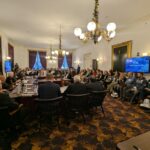
On Thursday, April 16, tourism and hospitality industry leaders gathered at the State House to engage with legislators and administration officials to highlight the collective contributions of the visitor economy to Vermont. Tourism Economy Day, convened by the Vermont Chamber of Commerce and Ski Vermont, brought businesses together to advocate for a strong Vermont visitor economy.  

Industry leaders shared perspectives during a joint legislative hearing with the House Committee on Commerce and Economic Development and the Senate Committee on Economic Development, Housing and General Affairs, offering real world insight into the opportunities and challenges facing Vermont’s tourism economy.  

Tourism Economy Day brought together business leaders, legislators, and administration officials, creating space for direct conversation between policymakers and the employers who power Vermont’s visitor economy. Industry voices from across the state shared perspectives rooted in their day-to-day operations and community impact.  

“A thriving tourism economy means vibrant communities and opportunity across Vermont,” said Amy Spear, President of the Vermont Chamber of Commerce. “Tourism Economy Day ensures lawmakers hear directly from businesses. While the industry remains a major economic driver, employers are navigating workforce shortages, housing availability challenges, and rising costs.”  

Business leaders highlighted both the strengths of Vermont’s tourism economy and the challenges facing the industry. Key themes included workforce shortages, housing availability and affordability, healthcare costs, and declining Canadian visitation. Leaders also emphasized the importance of strengthening career pathways in hospitality, from culinary training to management and entrepreneurship.  

“Tourism businesses, including our ski areas, are a key driver of visitation and help support many rural communities across the state,” said Molly Mahar, President of Ski Vermont. “In addition to affordability issues and workforce and housing shortages, businesses also face an inefficient and inconsistent permitting process that adds cost and time to projects, affecting businesses’ ability to grow and remain competitive. Tourism Economy Day ensures those realities are part of the conversation as policymakers look ahead.”

The day’s programming included a joint legislative hearing, a presentation from the Vermont Department of Tourism and Marketing, and a conversation with Lieutenant Governor John Rodgers.  

Commissioner Heather Pelham shared updates on visitation trends, marketing strategies, and the impact of tourism on the state’s economy. The day concluded with an acknowledgment on the House Floor recognizing tourism’s vital role in Vermont and declaring April 16, 2026, Tourism Economy Day.  

Tourism Economy Day highlights the role of tourism in advancing the Vermont economy through collaboration between businesses and policymakers. Vermont’s visitor economy has a $4.2 billion annual economic impact and employs 9% of the Vermont workforce. 

CONNECT WITH OUR TOURISM AND HOSPITALITY EXPERT

Amy Spear

President

Fiscal Policy, Taxation, Tourism and Hospitality, Workforce Development

RECENT NEWS

State of the State

State of the State

Governor Phil Scott’s State of the State on January 7 focused on education and Vermont’s affordability challenge, highlighting a growing disconnect between rising costs and student outcomes. With one-time federal funds exhausted and federal uncertainty looming, the Governor emphasized fiscal discipline, accountability, and implementation, particularly in education, as essential to restoring affordability and predictability. The message was clear: Vermont can no longer sustain rising costs without corresponding improvements in outcomes. 


As the Vermont Chamber has shared with members and communities statewide, the Vermont Chamber supports policy that leads to strategic growth of people and places. As the state’s largest business advocacy organization, we focus on turning planning into policy and policy into progress. Through the Vermont Economic Action Plan and a data-informed, member-driven legislative agenda, the Chamber continues to advance affordability, opportunity, and long-term economic resilience. 


Rising public costs, especially in education, show up in immediate and tangible ways for businesses. Higher property taxes, constrained housing supply, intensified workforce pressures, and increased difficulty planning for the future are now common challenges. The Governor’s call to complete education transformation aligns directly with the Chamber’s first legislative priority, Economic Abundance Through Fiscal Stewardship, recognizing that bending the cost curve frees up resources for housing, infrastructure, and tax relief. 


The State of the State made clear that achieving those outcomes will not be easy or smooth. The Governor underscored that completing Act 73, last year’s education reform law, requires meaningful structural change, including district mapping and governance reform. He emphasized that the current system was built for a Vermont that no longer exists and signaled a willingness to use veto authority if reforms stall. 


House Democratic leadership, speaking at a press conference, reinforced a shared focus on affordability, housing, health care, and public education, while signaling a more cautious approach to implementation. Speakers emphasized transparency, data review, and continued engagement with Vermonters, noting that many details remain under consideration as the session begins. 


Legislative leaders, while reaffirming support for Act 73 and education quality, offered responses that suggested less alignment on timelines and tools. Questions around district mapping, spending thresholds, and property tax relief highlighted early tension with the Administration’s insistence that maps be treated as an essential next step, rather than a longer-term consideration. 


While there is broad agreement that change is required, success this session will depend on moving beyond shared diagnosis to shared execution. Education costs ripple through property taxes, housing affordability, workforce availability, and long-term competitiveness, underscoring the Chamber’s priorities around workforce and housing alignment and industry competitiveness. 


SHARE THIS ARTICLE

RECENT NEWS

Tourism Economy Day Brings Business and Policy Leaders Together at the State House

Tourism Economy Day Brings Business and Policy Leaders Together at the State House

Over 100 tourism and hospitality industry leaders gathered at the State House on April 10 to engage with legislators and raise awareness of the collective contributions of these industries to the Vermont economy. Tourism Economy Day, convened by the Vermont Chamber of Commerce, Ski Vermont and Vermont Specialty Food Association, brought businesses together to advocate for a thriving Vermont visitor economy.

The Vermont visitor economy has a $4 billion annual economic impact and represents 10% of our workforce. In 2023 alone, 15.8 million visitors spent $4.0 billion across lodging, dining, retail, entertainment, recreation, and more. Their spending also contributed $282.3 million in state and local taxes—equivalent to approximately $1,039 per Vermont household. Businesses, legislative leaders, and Administration officials collaborated for a day of advocacy that elevated the collective contributions of the visitor economy to Vermont. Advocacy day highlights included a joint hearing with the Senate Committee on Economic Development, Housing and General Affairs and House Committee on Commerce and Economic Development, a joint resolution recognizing April 10, 2025, as Tourism Economy Day, and an evening food and beverage tasting reception with the Vermont Specialty Food Association.

Rep. Abbey Duke (Chittenden-17), a stalwart supporter of the tourism industry, shared “Vermont’s tourism sector is a cornerstone of our state economy, generating billions in economic activity, supporting tens of thousands of jobs, and enriching our communities. It’s essential for legislators to support policies that foster sustainable growth in tourism, including investments in infrastructure, housing, workforce development, and supporting local businesses.”

“A thriving tourism economy means vibrant communities and a chance for everyone—whether you’re a local or a visitor—to experience the very best of Vermont. However, the industry is facing challenges echoed by so many across the state: an aging declining workforce and a critical housing shortage.” said Amy Spear, President of the Vermont Chamber of Commerce. “It’s crucial that we find a path towards affordability and abundance, improving economic conditions. Vermont’s beauty and charm are undeniable, and together, we can create an environment where both our tourism industry and our communities can thrive for generations to come.”

Business leaders highlighted the following sentiments in their testimonies: the role of tourism supporting Vermont’s economy and communities, the industry’s centrality in providing jobs and making Vermont an appealing destination to both live and visit, and the collective challenges facing businesses in the industry, including: workforce shortages, workforce housing accessibility and affordability, rising taxes and high operating costs and a strained relationship with Canadian neighbors due to federal rhetoric.

“Outdoor recreation is a significant part of Vermont’s tourism economy, driving visits and fueling the economy in many rural parts of our state. In 2023, outdoor recreation accounted for 4.8% of the state’s GDP, or $2.1B annually, and 5.1% of the state’s workforce, according to the US Bureau of Economic Analysis,” said Molly Mahar, President of Vermont Ski Areas Association. “Vermont ranks second only to Hawaii in percent of GDP generated by outdoor recreation, which is largely driven by activities like skiing, snowboarding, hiking, mountain biking, and camping. However, businesses are grappling with workforce and housing shortages, higher costs, and new uncertainty around Canadian visitation levels, which limit growth.”

Additional business and policy leaders that testified were Nina Ridhibhinyo, Director of Programs & Strategy at ECHO, Leahy Center for Lake Champlain, Randy George, Owner of Red Hen Baking Co., Québec Delegate Rene Sylvestre of the Québec Government Office in Boston, Will Kriewald, CEO of Basin Harbor Resort and Boat Club, Abby Long, Executive Director of Kingdom Trails, Kate Trzaskos, Executive Director of Downtown Brattleboro, Vicky Allard, Founder and Executive Chef at Blake Hill Preserves, Steve Wright, President/General Manager at Jay Peak Resort, and Kim Jackson, Director of Communications and Marketing at Vermont Adaptive.

The day ended with a Vermont Specialty Food Association Legislative Tasting, featuring vendors from across Vermont. Karin Cioffi, Executive Director of VSFA shared, “Vermont’s specialty food and beverage producers are a cornerstone of the state’s identity and a driving force behind the visitor experience. Tourists don’t just come for the views, they come to taste Vermont. From handcrafted cheeses to small batch spirits, these products represent the passion, innovation, and resilience of our local businesses. Our evening tasting event at the State House showcased the incredible talent of producers across the state and underscored just how vital this industry is to Vermont’s economy, culture, and continued appeal as a destination.”

Photo Credit for Images 3 and 4: Blake Hill Preserves

Vermont Chamber Advocates for Economic Growth and Housing Solutions 

Vermont Chamber Advocates for Economic Growth and Housing Solutions

The Vermont Chamber advocacy team engaged with both House and Senate committees to outline priorities aimed at fortifying Vermont’s economy. Discussions centered on housing affordability, workforce challenges, regulatory reforms, technology, and positioning Vermont as a premier relocation destination. 

Tourism and manufacturing were highlighted as economic pillars, each contributing $3 billion annually and employing thousands of Vermonters. The Chamber’s Foundation, the Vermont Futures Project, was spotlighted for its focus on long-term economic planning, ensuring these critical sectors continue to drive statewide prosperity. 

Housing availability and affordability took center stage as a pressing concern. The Chamber will continue advocating for meaningful reforms to reduce construction costs, improve infrastructure, and expand access, emphasizing the importance of addressing Vermont’s demographic challenges and workforce gaps to sustain economic vitality. 

The Chamber emphasized the integral connection between business growth and wage growth, presenting data that reinforces the need for collaborative efforts to support businesses. Economic development remains a priority for the Vermont Chamber, and the team is poised to work alongside lawmakers to ensure businesses have the resources and environment necessary to thrive. 

To bolster advocacy efforts surrounding technology issues, the Vermont Chamber introduced attorney Josh Diamond from Dinse, who the Chamber has hired on retainer. With his extensive legal expertise and six years of experience as Vermont’s Deputy Attorney General, Josh will provide critical insights and representation for Vermont’s business community on emerging technology challenges. 

The team will do additional introductions next week and will dive into expert testimony on legislation. Through proactive collaboration with lawmakers, stakeholders, and industry leaders, the Vermont Chamber continues to champion policies that advance Vermont’s economy and enhance quality of life for all. 

SHARE THIS ARTICLE

RECENT NEWS

Rental Registry Relegated to a Study

Rental Registry Relegated to a Study

A bill that would have created a statewide rental registry was amended by the House Ways and Means Committee to fundamentally stall the bill and delay the intended progress toward equity in the lodging industry and data to aid housing solutions until next session. Before being amended, H.276 would have been a step forward to leveling the playing field for the lodging industry by ensuring a safe rental environment, moving towards equity in the lodging marketplace, and providing information for future pragmatic policy decisions. 

The Vermont Chamber will continue to be engaged on this issue throughout the remainder of the session and is expected to testify further. 

SHARE THIS ARTICLE

RECENT NEWS

Statewide Rental Registry Would Address Lodging Equity and Aid Housing Discussions

Statewide Rental Registry Would Address Lodging Equity and Aid Housing Discussions

Legislation that would create a rental housing registry is in consideration by the House General and Housing Committee. The Vermont Chamber testified on H.276 this week in support of a statewide registry, noting that the bill would collect the basic information necessary to provide data for future conversations on enforcing health and safety regulations for short-term rentals (STRs). The Vermont Chamber has been a strong advocate for equity in the lodging industry as well as the need to address how STRs are contributing to the housing shortage.  

Data from a 2020 report to the legislature on the impact of short-term rentals (STRs) highlighted the impact on available housing stock. Since then, the state of housing has only worsened. For the lodging industry, the registry would be a step forward to leveling the playing field by ensuring a safe rental environment, moving towards equity in the lodging marketplace, and providing information for future pragmatic policy decisions. 

SHARE THIS ARTICLE

RECENT NEWS

H-2B Returning Worker Exemption Act​

H-2B Returning Worker Exemption Act
Earlier this month, the Department of Labor (DOL) announced that it had received requests for more than 136,000 H-2B workers and there are only 33,000 available under the congressionally authorized statutory cap. Many hotels rely on the H-2B program to augment their domestic workforce during their peak season to ensure they can operate at full capacity. With ongoing concerns due to OMICRON and COVID-19 pandemic, combined with an acute workforce shortage, access to H-2B visas are more crucial now than ever before especially for the lodging industry. 
 
The recently introduced H-2B Returning Worker Exemption Act would provide a returning worker exemption and increased integrity measures to strengthen the H-2B visa program. Act now to urge your representative to co-sponsor the H-2B Returning Worker Exemption Act.