Strong Privacy, Workable Policy: The Real Debate Around Vermont’s Data Privacy Bill

Strong Privacy, Workable Policy: The Real Debate Around Vermont’s Data Privacy Bill

Vermont Can Protect Privacy Without Hurting Vermont Businesses

The Vermont Chamber of Commerce supports meaningful consumer data privacy protections. Vermonters deserve more control over their personal information, and businesses benefit when consumers trust how their data is handled.

The question before lawmakers is not whether Vermont should protect consumer privacy. It should.

The question is whether Vermont adopts a strong, workable privacy law that aligns with other New England states, or whether it moves forward with first-in-the-nation provisions that have not been tested anywhere else.

What the Senate-Passed Bill Does

S.71, as passed by the Senate, gives Vermonters major new privacy rights. Under the bill, consumers would have the right to:

  • Know if a business is collecting their personal data
  • Correct inaccurate personal information
  • Ask for their personal data to be deleted
  • Get a copy of the data a business has collected about them
  • Opt out of targeted advertising, the sale of personal data, and certain profiling activities

The Senate-passed bill also requires businesses to follow security practices that protect the confidentiality, integrity, and accessibility of personal data.

Why This Matters for Vermont

Vermont businesses are not asking for no privacy law. They are asking for a law that protects consumers while also being clear, fair, and possible to follow.

Many Vermont businesses use basic digital tools to reach customers, sell products, promote events, process transactions, recruit workers, and compete in a modern economy. These are not abstract “Big Tech” companies. They are local employers, nonprofits, retailers, manufacturers, tourism businesses, service providers, and community organizations.

Concerns With the House Draft

The House proposal includes new provisions that go far beyond privacy laws in nearby states like Connecticut, Rhode Island, and New Hampshire.

These changes could:

  • Pull small businesses and nonprofits into complex regulations
  • Remove opportunities for businesses to fix mistakes before facing penalties
  • Create unclear legal standards that have not been tested in any other state
  • Restrict common digital tools local businesses use to communicate with customers
  • Increase legal risk and compliance costs for Vermont organizations

Strong privacy protections and workable rules are not mutually exclusive. Vermont can do both.

Vermont Businesses Are Speaking for Themselves

More than 100 Vermont businesses and organizations signed a letter urging the House to advance S.71 as passed by the Senate and reject novel, untested provisions.

These are Vermont employers and organizations raising real implementation concerns. They deserve to be heard in the legislative process.

The Bottom Line

This is not a choice between privacy and no privacy.

S.71 as passed by the Senate provides meaningful consumer protections, regional consistency, and a clear path for compliance.

The Vermont Chamber urges lawmakers to support the Senate-passed version of S.71 and reject novel provisions that could create unintended consequences for Vermont businesses, nonprofits, and communities.


Beyond Tax Brackets: How Proposed Tax Changes Impact Vermont’s Businesses, Workforce, and Economy

Beyond Tax Brackets: How Proposed Tax Changes Impact Vermont’s Businesses, Workforce, and Economy

Analysis led by Amy Spear, President, in partnership with the Vermont Futures Project

Overview

The Vermont Chamber of Commerce advances the Vermont economy through advocacy, community, and resources. As part of that work, we analyze how policy decisions intersect with Vermont’s unique economic structure.

A proposal currently under consideration would introduce new tax provisions, including a high-income surtax, an investment proceeds tax, and a minimum tax based on adjusted gross income. While often framed as a tax on wealth, the structure of this proposal means its effects extend well beyond passive income. In Vermont, where the economy is largely driven by locally owned, pass-through businesses, the practical impact reaches into active business operations, workforce competitiveness, and long-term economic growth.

Why This Matters for Vermont

Vermont’s economy is distinct. Most businesses are not large corporations. They are small and mid-sized employers structured as:

  • LLCs
  • S corporations
  • Partnerships
  • Sole proprietorships

In these models, business income flows through to personal tax returns. That means what appears as individual income is often active business income used to operate and grow a company. Understanding this structure is essential to evaluating how tax policy functions in practice.

A Look at Vermont’s Current Tax Structure

Vermont already has one of the most progressive tax systems in the country.

  • Vermont ranks near the top nationally in tax progressivity
  • Higher income earners already contribute a disproportionate share of total income tax revenue
  • Effective tax rates increase steadily across income brackets

This context is important. The conversation is not about whether Vermont has a progressive system. It already does. The question is how additional structural changes interact with Vermont’s economic realities.

What the Proposal Does

The proposal introduces three major changes:

  1. New surcharge layers on higher income taxpayers
  2. A new tax on certain investment-related gains
  3. A minimum tax requiring taxpayers above a threshold to pay a percentage of adjusted gross income

Unlike traditional tax structures based on taxable income, this approach introduces a minimum tax floor tied to gross income, regardless of deductions, reinvestment, or business expenses. This distinction is critical for Vermont businesses.

The Pass-Through Effect: When Business Income Is Personal Income

For many Vermont employers, income reported on a personal tax return is not discretionary income. It may already be committed to:

  • Payroll
  • Equipment and capital investment
  • Insurance and operating costs
  • Debt service

For example, a business owner may report strong income in a given year, but much of that income is reinvested into the business to sustain operations and growth. Policies that do not distinguish between passive income and active business income can create outcomes that do not align with how businesses actually function.

Reinvestment and Growth Implications

Business growth in Vermont often depends on retained earnings. When after-tax resources are reduced, businesses may face harder decisions around:

  • Hiring
  • Wage increases
  • Expansion
  • Innovation

In a state working to grow its economy and address workforce shortages, reinvestment capacity is a key driver of long-term success.

Business Succession and Local Ownership

One of the most significant considerations is the impact on business succession.

When a Vermont business owner retires or sells a company, the transaction often generates capital gains. These are not abstract financial events. They represent years, often decades, of investment and risk.

Changes to how these transactions are taxed can influence outcomes such as:

  • Whether businesses are transferred locally or sold to outside buyers
  • The viability of employee or family ownership transitions
  • The long-term presence of locally rooted businesses

Across industries, from engineering firms to healthcare practices to hospitality businesses, there is increasing pressure from external buyers, including private equity.

When local ownership becomes more difficult to sustain, it can gradually reshape the structure of Vermont’s economy.

Workforce Competitiveness

Vermont is already facing workforce shortages in critical fields, including:

  • Healthcare
  • Engineering
  • Technology

Many of these professions fall within income ranges affected by the proposal. In a competitive regional landscape, policy decisions influence where professionals choose to live and work. Even incremental differences in tax structure can affect recruitment and retention over time.

Economic Stability and Revenue Considerations

A tax system that relies heavily on a small group of high-income filers can introduce:

  • Revenue volatility
  • Greater sensitivity to economic cycles
  • Increased exposure to changes in taxpayer behavior

In a small state, these dynamics can have outsized effects. Long-term fiscal stability is strengthened by broad-based growth that expands the tax base over time.

Affordability and Structural Challenges

Affordability is a central concern for Vermonters. However, it is important to distinguish between redistribution and structural change.

Addressing affordability at its core requires:

  • Expanding housing supply
  • Strengthening workforce participation
  • Managing healthcare costs
  • Improving economic productivity

These are the drivers that reduce costs over time and support sustainable growth.

Alignment with Vermont’s Economic Strategy

Vermont’s long-term strategy, as outlined in the Economic Action Plan, focuses on:

  • Growing the workforce
  • Expanding housing
  • Increasing business investment
  • Strengthening competitiveness

Policies that support these goals help build a larger, more resilient economic base. Policies that constrain reinvestment, complicate succession, or reduce competitiveness can move the state in the opposite direction.

A Path Forward

As Vermont continues to evaluate its policy choices, there is an opportunity to align tax policy with long-term economic goals by:

  • Distinguishing between passive wealth and active business income
  • Supporting business succession and local ownership
  • Preserving reinvestment capacity
  • Evaluating workforce competitiveness impacts

The Bottom Line

In Vermont’s economy, tax policy does not operate in isolation. Because of the state’s reliance on pass-through businesses and locally owned enterprises, changes to personal tax structures can have broad and sometimes unintended effects.

A strong and sustainable Vermont economy depends on policies that:

  • Encourage growth
  • Support local businesses
  • Attract and retain workforce
  • Expand opportunity over time

THE DATA BEHIND THE ANALYSIS

From Planning to Policy: Vermont’s Economic Moment Is Now

From Planning to Policy: Vermont’s Economic Moment Is Now

As Vermont lawmakers return to Montpelier following Town Meeting break, the legislative session enters the phase where ideas must become decisions. For Vermont’s economy, those decisions carry real consequences.

The first half of the session is often defined by hearings, proposals, and policy exploration. The second half is where priorities are tested, and choices become outcomes.

Over the past several years, Vermonters have done something important. We have invested significant time and energy into planning for the state’s economic future. The Vermont Futures Project’s Economic Action Plan brought together the perspectives of more than 5,000 Vermonters and established measurable goals for workforce growth, housing development, and long-term economic opportunity.

That effort produced something Vermont has historically lacked: a shared economic roadmap grounded in data.

But a roadmap alone does not move the state forward. Vermont has long excelled at identifying challenges, but progress requires moving beyond episodic decision making toward sustained economic strategy.

The question now is whether Vermont will translate that planning into policies capable of addressing the economic pressures businesses and families are experiencing today.

Those pressures are real.

Nationally, the economic outlook entering March reflects cautious resilience paired with continued uncertainty. Inflation remains above the Federal Reserve’s long-term target; interest rates remain elevated, and many industries report difficulty finding workers while managing rising costs.

For Vermont, these national dynamics are amplified by structural challenges closer to home.

Recent economic competitiveness data place Vermont near the bottom nationally on measures including economic momentum, long term outlook, and workforce demographics. These rankings underscore the structural challenges the state must address to strengthen affordability and economic opportunity.

Demographics alone present a stark reality. Over 17,000 Vermonters are projected to retire annually this decade, while far fewer young workers are entering the labor force. To maintain economic stability, Vermont must add roughly 13,500 workers each year through population growth and workforce expansion.

At the same time, housing shortages continue to constrain that growth. The state will need tens of thousands of additional housing units to support the workforce Vermont’s economy requires.

When businesses cannot find workers, expansion stalls. When housing is unavailable or unaffordable, recruitment becomes nearly impossible. When regulatory timelines stretch into years instead of months, investment flows elsewhere.

Employers across Vermont are experiencing these pressures simultaneously.

There have been encouraging signs of progress. Conversations about health care affordability, housing infrastructure, and workforce recruitment reflect a growing recognition that Vermont’s affordability challenges are interconnected.

Vermonters are confronting rising property taxes and education costs that are intensifying the broader affordability conversation across communities. Recognizing the challenge, however, is not the same as solving it. If Vermont is serious about improving affordability and strengthening economic opportunity, several principles should guide the decisions ahead.

First, Vermont must strengthen fiscal predictability. State spending has grown significantly in recent years, placing pressure on the tax base that supports essential services. Businesses and families alike need stability and transparency in fiscal policy to make long term decisions about investment, hiring, and where to build their future.

Second, Vermont must modernize the regulatory systems that shape housing and economic development. Employers consistently report that permitting timelines and regulatory complexity increase costs and slow projects that communities need.

Third, Vermont must confront the reality of demographic change. A shrinking working age population is not a temporary challenge, but a structural shift that will shape Vermont’s economic capacity for decades. Addressing it requires coordinated strategies to recruit new residents, retain graduates, and expand housing and opportunity for the next generation of Vermonters.

These priorities reflect the areas the Vermont Chamber identified at the start of the legislative session and continue to guide our work in Montpelier as the session moves into its second half. These issues are not simply business concerns.

When businesses grow, they create jobs, support local tax bases, and sustain the services communities rely on, from schools and infrastructure to the small-town economies that define Vermont’s identity.

The Vermont Chamber of Commerce works to bring these economic realities into policy discussions every day in Montpelier. Representing employers of all sizes, industries, and regions of the state, the Chamber’s role is to ensure that the perspective of Vermont’s business community is part of the decision-making process.

Vermont has done the planning. The data is clear. The goals are defined.

The weeks ahead will determine whether Vermont translates that planning into policy and whether those policies lead to the action necessary to strengthen affordability, competitiveness, and opportunity across the state.

Vermont’s future is not predetermined. It will be shaped by the policy choices made in Montpelier in the weeks ahead.

CONNECT WITH OUR TEAM

Amy Spear

President

Fiscal Policy, Taxation, Tourism and Hospitality, Workforce Development

RECENT NEWS

Birnn Chocolates of Vermont Named Outstanding Business of the Year

Birnn Chocolates of Vermont Named Outstanding Business of the Year

Award to be Presented at the Vermont Economic Conference

VermontBiz and the Vermont Chamber of Commerce are pleased to announce Birnn Chocolates of Vermont as the recipient of the Outstanding Business of the Year Award. The award will be presented on January 27 at the Vermont Economic Conference, the state’s premier economic gathering of business and policy leaders.


Founded in 1915, Birnn Chocolates of Vermont represents more than a century of craftsmanship, entrepreneurship, and enduring commitment to doing business with integrity. Now in its fourth generation of family ownership, the company has grown into a nationally distributed brand while keeping its roots and its production firmly planted in Vermont.


“Birnn Chocolates of Vermont is deeply honored to be named Outstanding Business of the Year,” said Julia Birnn Fields, fourth generation owner. “Choosing to build and grow our business in Vermont was an intentional decision. It allows us to operate in a place where relationships matter and where businesses have the opportunity to make a real, positive impact. Today, every truffle we sell in all 50 states is made right here in South Burlington. This recognition reflects the dedication of our team, including many employees who have been with us for decades, and the opportunity I have, as the fourth generation, to carry forward our family’s legacy of doing good, honest business while contributing meaningfully to Vermont’s economy.”


Birnn Chocolates of Vermont exemplifies what it means to grow with purpose, balancing innovation and scale with deep respect for people, place, and community. The company is known not only for its premium truffles, but also for being a trusted employer, a reliable wholesale partner, and a business that has chosen to invest long-term in Vermont.


“Birnn Chocolates of Vermont reflects the very best of Vermont business,” said Amy Spear, President of the Vermont Chamber of Commerce. “For more than a century, this family-owned company has shown that you can grow, compete nationally, and stay deeply rooted in Vermont. Their commitment to quality, workforce stability, and local investment embodies what it looks like when businesses strengthen both the economy and the communities around them.”

Katie Kittell, Publisher of VermontBiz, echoed that sentiment. “Outstanding Business of the Year honors companies that demonstrate leadership, resilience, and positive impact over time,” said Katie Kittell. “Birnn Chocolates of Vermont stands out for its longevity, its values, and its ability to evolve while staying true to its roots. Their story is one that deserves to be celebrated statewide.”


For over 35 years, VermontBiz and the Vermont Chamber of Commerce have partnered to present the Outstanding Business of the Year award, recognizing Vermont companies that demonstrate excellence in business operations, community engagement, workforce investment, and long-term contribution to the state’s economy. Birnn Chocolates of Vermont will be formally recognized during the Vermont Economic Conference, where hundreds of business leaders from across the state will gather for insight, connection, and conversation about Vermont’s economic future.


For 35 years, VermontBiz and the Vermont Chamber of Commerce have partnered to present the Outstanding Business of the Year Award, recognizing the state’s most dynamic and community-minded companies.

SHARE THIS ARTICLE

RECENT NEWS

Issue Updates from the State House | Week of January 6, 2026

Issue Updates from the State House

Week of January 6, 2026

A weekly snapshot of key legislative activity impacting Vermont’s business community. 

  • Groundwater: The Legislative Committee on Administrative Rules approved a rule change tightening groundwater enforcement standards for certain PFAS chemicals. The new rules exclude wastewater, stormwater, and sewage, but stricter standards could affect businesses with indirect discharge permits or other PFAS-related discharges.
  • Electricity Storage: The Legislative Committee on Administrative Rules approved a new rule establishing guidelines for energy storage.
  • Budget Adjustment Act: Legislators heard testimony as part of the annual Budget Adjustment Act process, an annual mid-year adjustment to the current budget. In a letter to House and Senate Appropriations committees, the Governor emphasized preserving as much of the $75 million surplus as possible to help offset a projected 12 percent property tax increase in the upcoming budget cycle.
  • Noncompete: The House Commerce and Economic Development committee reviewed findings from the Non-Compete Agreements Study Committee, which concluded that non-compete agreements are appropriate for high-wage employees with access to proprietary information. The Vermont Chamber will work to ensure any legislation preserves employers’ ability to protect sensitive business information.
  • Franchisors: The House Commerce and Economic Development Committee heard testimony on potential regulation of franchisors. Vermont lacks data on the number and structure of franchises operating in the state, making it difficult to assess the scope or justify a new regulatory program.
  • Event Ticket Marketing: The House Commerce and Economic Development committee resumed testimony on H.512, a bill aimed at reining in the marked-up resale of event tickets. The Vermont Chamber will continue to closely monitor this issue as the bill develops.
  • Rural Health Care: The House Health Care Committee heard testimony on the federal Rural Health Transformation Program grant, which will provide Vermont with $195 million annually for the next five years. The funding will support rural hospital improvements, bolster the rural health workforce, and modernize rural health systems.
  • Convention Center Task Force: The House Commerce and Economic Development and Senate Economic Development Housing, and General Affairs committees reviewed the Convention Center Task Force report, which identified Burlington as the most feasible location for a convention center after input from industry stakeholders. Securing a viable funding model remains a significant challenge.
  • Transportation Fund: The House Ways and Means and House Transportation Committees heard testimony on growing shortfalls in the Transportation Fund. Without increased funding, Vermont risks losing federal match dollars, and over 50 percent of state-maintained roads are projected to fall into poor or worse condition within the next five years.
  • Community and Housing Infrastructure Program (CHIP): The House Commerce and Economic Development and House General and Housing Committees heard testimony on the rollout of the Community and Housing Infrastructure Program (CHIP), established last session. The program allows municipalities and qualified sponsors to invest in infrastructure that supports housing development, with applications set to open at the end of the month.

CONNECT WITH OUR TEAM

Megan Sullivan

she/her

Vice President of Government Affairs

802-522-6316

RECENT NEWS

Healthcare Costs and Affordability in Vermont

Healthcare Costs Remain a Central Affordability Challenge for Vermont Employers

As lawmakers prepare for the upcoming legislative session, healthcare affordability remains one of the most significant pressures facing Vermont’s economy. At a recent Legislative All Member Healthcare Briefing, state leaders, regulators, providers, and stakeholders reviewed the current state of Vermont’s healthcare system, which now totals $2.5 billion and accounts for nearly 30 percent of the state budget when federal dollars are included.

The briefing reinforced the reality employers know well. Vermont’s healthcare system is under strain, and costs continue to rise faster than both wages and national trends. Hospitals and insurers remain financially fragile, community-based care gaps are pushing patients into higher cost emergency and inpatient settings, and access challenges persist across the state. Presenters emphasized that Vermont’s comparatively modest premium increase last year was achieved through one-time interventions, including premium buydowns, drug price caps, and budget reductions. These tools cannot be relied on again.

The Vermont Chamber presented on behalf of the business community, underscoring healthcare costs are now among the top competitiveness challenges for employers statewide. Since 2018, health insurance premiums have increased 10 to 15 percent annually, with the average silver plan rising 169 percent. These sustained increases make long term planning difficult and limit employers’ ability to invest in growth, wages, and workforce benefits.

The Chamber also highlighted that Vermont spends 19.6 percent of personal income on healthcare, the highest share in the nation. This cost burden directly affects hiring, retention, and business expansion, reinforcing concerns raised consistently by employers through the Vermont Business Climate Survey.

The following day, the Health Care Reform Oversight Committee met to examine next steps for reform. Discussions focused on regionalization and coordination as tools to reduce duplication, preserve essential services, and improve efficiency through shared purchasing, aligned clinical design, and modernized data systems. Hospitals outlined commitments to significant cost reductions by 2028 while acknowledging persistent workforce shortages and burnout that continue to challenge care delivery.

As Vermont faces impending federal subsidy changes and Medicaid eligibility shifts, there is growing consensus that incremental, structural reforms are needed to stabilize the system over time. The Vermont Chamber will remain actively engaged to ensure that healthcare reforms advance affordability and access while avoiding further cost shifts onto employers and workers who are already carrying a disproportionate share of the burden.

CONNECT WITH OUR HEALTHCARE EXPERT

Megan Sullivan

she/her

Vice President of Government Affairs

802-522-6316

RECENT NEWS

Education Property Taxes and Affordability in Vermont

Education Property Taxes and Vermont’s Affordability Challenge

Vermont’s education property taxes are projected to rise by approximately 12 percent in 2026, driven by continued growth in school spending and the expiration of last year’s tax buydowns. This increase comes at a time when affordability pressures are already weighing heavily on households, employers, and communities across the state.

Last year’s buydown was adopted with a clear understanding that it would provide temporary relief while lawmakers and the administration addressed the underlying cost drivers in Vermont’s education funding system. That commitment now hangs in the balance. Student enrollment has declined by more than 30 percent over the past two decades, yet education spending continues to rise, pushing per-pupil costs sharply higher.

Gov. Phil Scott has proposed using nearly $75 million in surplus tax revenues for another buydown in the coming year. It’s not yet clear if lawmakers will approve that use of Vermont’s much-needed surplus funds. There is an urgent need for durable, structural reforms.

Without them, cost pressures will continue to shift onto property taxpayers, including Vermont’s employers.

For the business community, these trends are deeply concerning. Employers are being asked to absorb higher tax burdens in a system that is delivering lower outcomes for fewer students. Vermont’s reading and math performance has slipped from among the strongest in the region to the middle of the pack, with recent assessments showing significant declines in key grades. These outcomes raise serious questions about cost-effectiveness, accountability, and long-term workforce readiness.

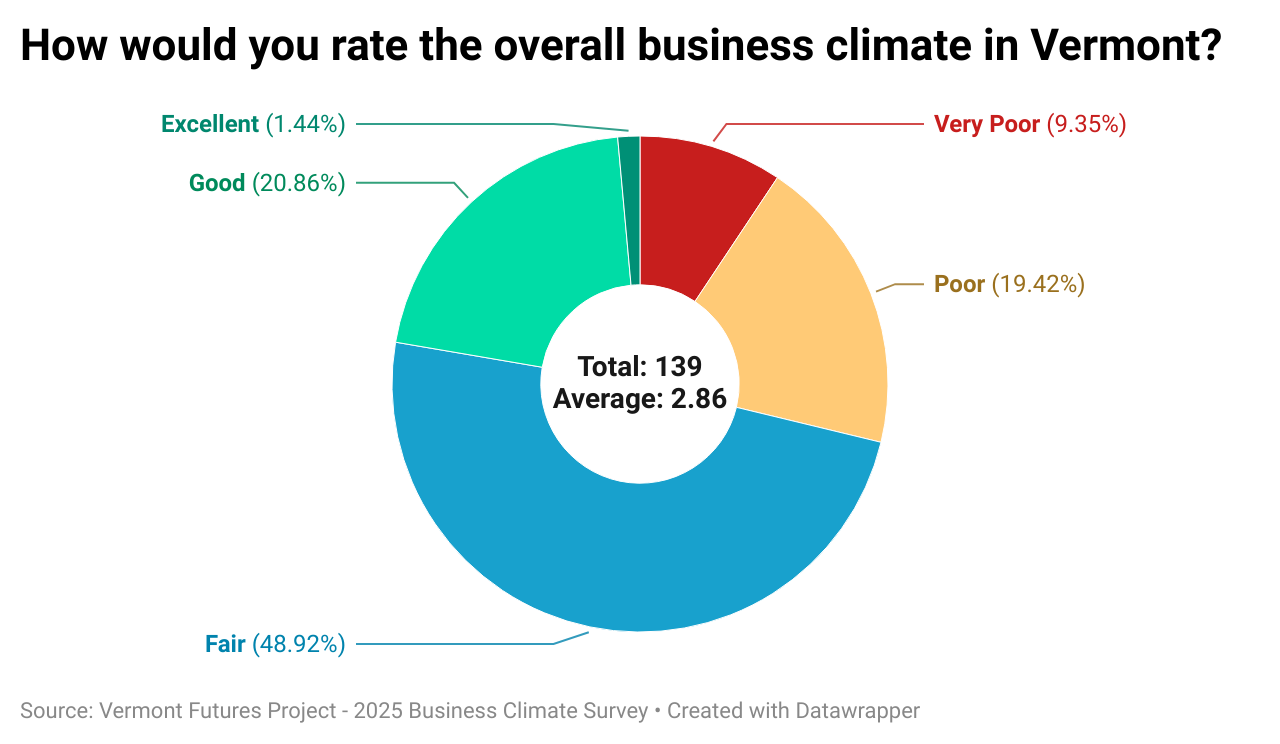
The business climate data reinforces this concern. According to the 2025 Vermont Business Climate Survey, employers rate the state’s overall business climate just 2.86 out of 5. Respondents cite rising costs, regulatory uncertainty, workforce availability, housing affordability, and taxes as the top constraints on growth. Rising education property taxes directly exacerbate these challenges.

Higher commercial property taxes increase operating costs and rents, tightening margins for small businesses and complicating decisions around expansion and investment. Housing affordability, already identified as a major barrier to recruitment and retention, worsens as property taxes rise, making it harder for employers across all industries to attract and retain workers.

As discussions continue around a “student-first” approach, it is important to ground reform efforts in data and outcomes. Improving educational results, strengthening accountability, and ensuring long-term sustainability must go hand in hand. An education system that serves students well also supports the broader conditions that shape their futures, including a strong economy, housing affordability, access to health care, and a competitive cost of living.

Some proposals would shift more of the education tax burden toward higher income taxes without addressing spending pressures. Without structural reform, these approaches risk further eroding Vermont’s affordability and competitiveness, particularly for skilled and mobile workers.

Last year, the business community successfully opposed a proposed business-only property tax classification that would have shifted costs disproportionately onto employers. As the Legislature revisits education funding, the Vermont Chamber will be watching closely to ensure businesses are not once again singled out to stabilize a system in need of reform.

The Vermont Chamber of Commerce continues to advocate for sustainable, data-informed reforms that address education spending pressures, improve outcomes for students, and protect Vermont’s business climate. Advancing affordability, strengthening the workforce pipeline, and supporting long-term economic vitality must remain central to any education funding solution.

CONNECT WITH OUR TAX EXPERT

Amy Spear

President

Fiscal Policy, Taxation, Tourism and Hospitality, Workforce Development

RECENT NEWS

Choosing Progress: Vermont Chamber’s 2026 Legislative Priorities

Choosing Progress: A Unified Path Toward Affordability and Economic Resilience

Vermont can no longer admire the problem. It must act, guided by data, employers, and long-term planning.

Each year, the Vermont Chamber of Commerce sets legislative priorities grounded in one core objective: advancing the Vermont economy. As we enter the 2026 session, Vermont stands at a defining moment. Affordability pressures, demographic decline, and rising operating costs are converging just as our state needs more workers, more housing, and greater predictability to sustain economic growth.

Our work toward long-range strategy began with the Vermont Economic Action Plan, a statewide blueprint shaped by more than 5,000 Vermonters. The plan established a clear vision for a stronger and more affordable future, grounded in data, pairing community insight and measurable targets. It also signaled a pivotal shift in how Vermont approaches economic decision-making. Instead of reacting to problems as they arise, we now have a long-term framework that can guide policy choices and align efforts across the public and private sectors.

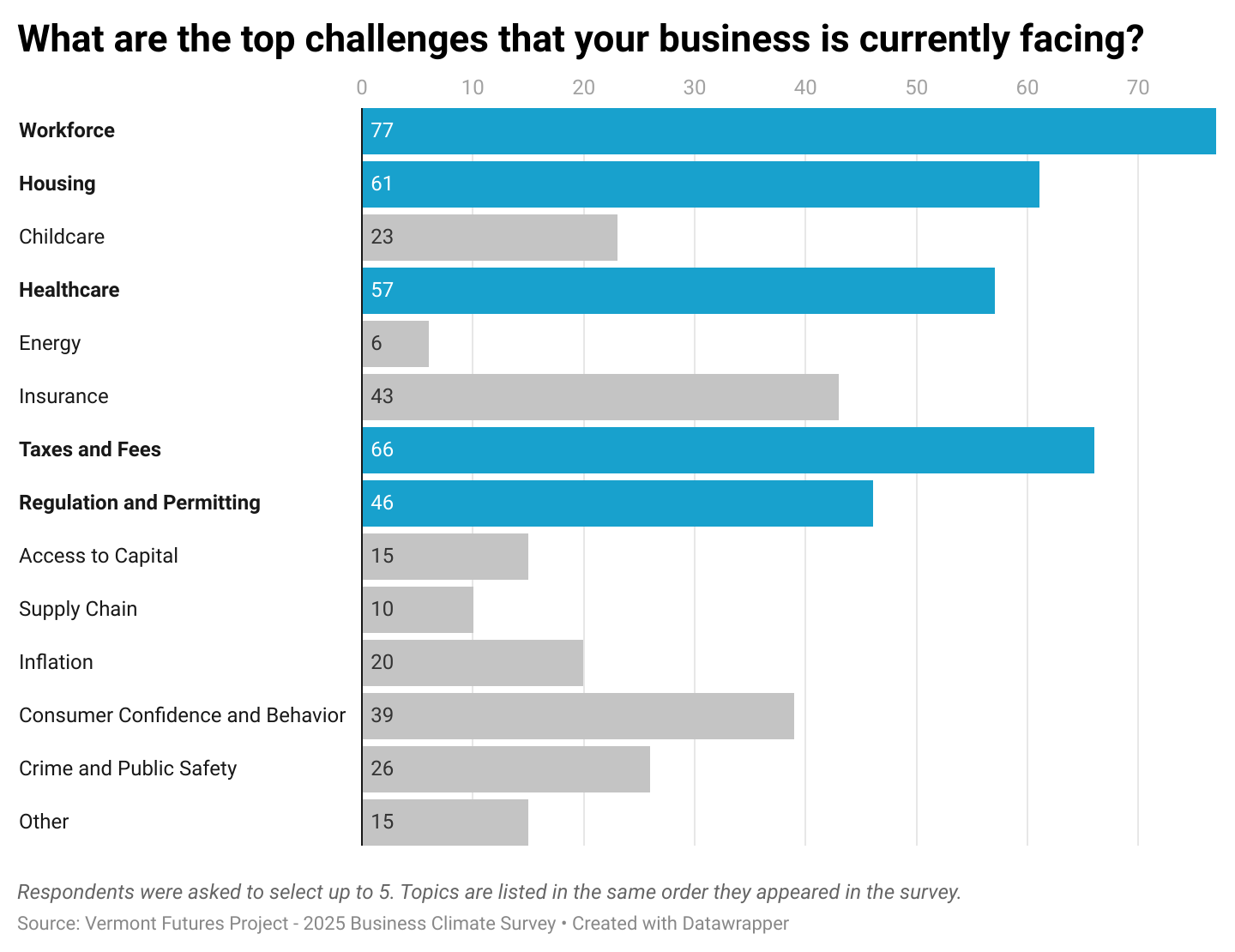
This alignment is urgently needed. The Vermont Futures Project’s Competitiveness Dashboard shows Vermont trailing most states in economic outlook, cost competitiveness, and regulatory efficiency. Vermont ranks 49th in Economic Outlook and continues to struggle with slow economic growth, high costs of doing business, and a demographic profile that strains employers and public systems. Results from this year’s Business Climate Survey reinforce this landscape. Employers identified taxes, regulation, labor shortages, healthcare costs, and housing challenges as the most significant barriers to growth.

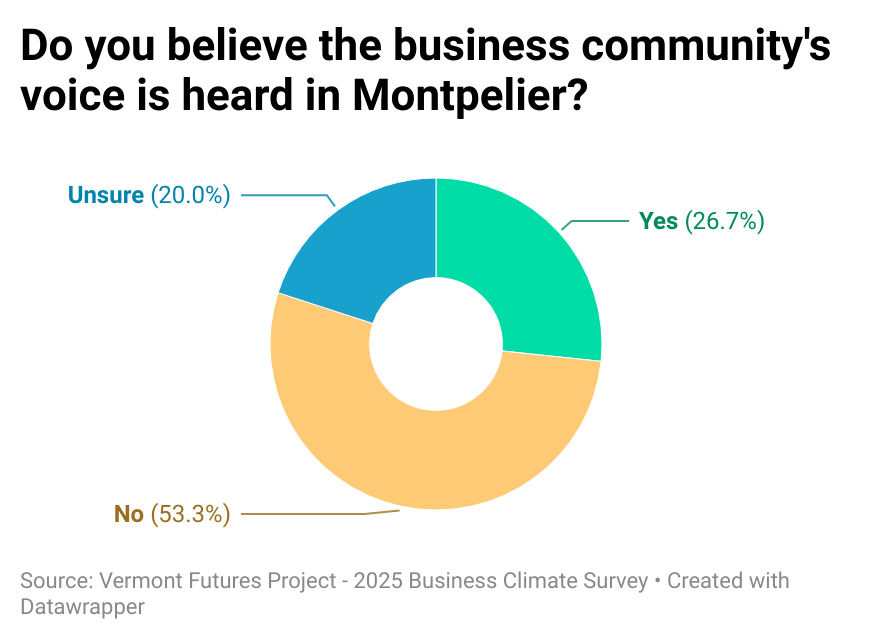
Many employers voiced concern that the state’s policy direction is disconnected from Vermont’s economic reality, and that they do not feel heard in Montpelier. Business leaders shared examples of policy decisions advancing without a clear understanding of operational impacts. This sentiment reflects a growing disconnect at the same moment Vermont needs alignment around affordability, stability, and long-term economic strategy. It also underscores the essential role the Vermont Chamber plays in bringing employer perspectives to the policy and regulatory tables and ensuring economic policy aligns with economic reality. Addressing Vermont’s challenges requires a sustained commitment to coordinated, data-informed action.


Many employers voiced concern that the state’s policy direction is disconnected from Vermont’s economic reality, and that they do not feel heard in Montpelier. Business leaders shared examples of policy decisions advancing without a clear understanding of operational impacts. This sentiment reflects a growing disconnect at the same moment Vermont needs alignment around affordability, stability, and long-term economic strategy. It also underscores the essential role the Vermont Chamber plays in bringing employer perspectives to the policy and regulatory tables and ensuring economic policy aligns with economic reality. Addressing Vermont’s challenges requires a sustained commitment to coordinated, data-informed action.


How confident or concerned are you about Vermont’s elected officials understanding of the economic pressures facing businesses?
A post on Datawrapper provided by: https://datawrapper.de

While there is difficult work ahead, progress was made last year on housing infrastructure, workforce programming, and slowing the growth of healthcare costs. While these advances were important, they are not enough on their own. Vermont must shift from episodic decision-making to a consistent, long-range economic strategy. The Economic Action Plan provides that roadmap. Paired with disciplined and transparent leadership, it offers a path toward measurable improvements for both families and employers.

Our 2026 legislative agenda reflects this approach and focuses on four core areas aligned with statewide priorities and employer needs:

Economic Abundance Through Fiscal Stewardship
Vermont must adopt predictable fiscal practices that control cost growth and strengthen affordability for families and employers. With state spending up more than three billion dollars in five years, the need for disciplined decision making is clear.

Regulatory Modernization and Predictability
A modernized regulatory system must support timely housing and economic development. Streamlined permitting and clearer rules will reduce costs, shorten timelines, and restore Vermont’s competitiveness.

Workforce and Housing Alignment
Employers report that workforce pressures and housing shortages remain among their highest concerns. Strengthening recruitment and retention requires connecting training strategies, talent attraction, and coordinated housing solutions.

Industry Competitiveness
Manufacturing, tourism, healthcare, technology, and small businesses all face rising pressures. Strategic investments in infrastructure, innovation, and cost containment will strengthen these key sectors.

As we begin the 2026 session, Vermont faces a choice. We need to shift from a scarcity mindset to an abundance mindset. The path forward requires courage, collaboration, and a commitment to measurable progress. Employers are ready to be partners in this work. Policymakers must be equally ready to align decisions with long-term strategy and economic reality.

Vermont’s future is not predetermined. It is shaped by the choices we make together. The Vermont Chamber stands ready to partner in this work and ensure our state’s economic story continues toward resilience, prosperity, and opportunity for all.

CONNECT WITH OUR TEAM

Megan Sullivan

she/her

Vice President of Government Affairs

802-522-6316

RECENT NEWS

2025 Vermont Business Climate Survey Results Released

2025 Vermont Business Climate Survey Results Released

The Vermont Futures Project has released the 2025 Vermont Business Climate Survey Findings Report, offering a detailed look at how employers across Vermont are experiencing the state’s economic environment. With responses from one hundred and thirty nine employers representing every major industry and all fourteen counties, this report provides an important snapshot of the conditions shaping Vermont’s economic future.


The findings show what many Vermont businesses continue to experience every day. Workforce shortages remain the most pressing challenge, affecting the ability of employers to meet demand and plan for growth. Housing availability and affordability continue to limit recruitment, retention, and mobility. Operating costs, including healthcare expenses and taxes, are placing growing pressure on budgets. Employers also express concern about regulatory predictability and whether their perspectives are reflected in statewide policy conversations.


These insights closely align with the priorities of the Vermont Economic Action Plan, which outlines the long term strategies needed to grow the workforce, expand housing supply, strengthen affordability, and create a more competitive and resilient future for the state. The survey results help clarify where progress is needed and where Vermont has the greatest opportunity to support long term economic stability.


The Vermont Chamber of Commerce appreciates the leadership of the Vermont Futures Project in producing this comprehensive analysis. Data informed insights like these are essential for shaping policy conversations in Montpelier and guiding collaborative work with the business community. The report provides a grounded understanding of the challenges employers face and reinforces the need for long term, thoughtful solutions.


Vermont businesses, policymakers, and community partners are encouraged to explore the full report and use this information to support planning, decision making, and collective action.


Read the full 2025 Business Climate Survey Findings Report

Vermont Chamber Announces Winners of the Coolest Thing Made in Vermont Awards

Vermont Chamber Announces Winners of the Coolest Thing Made in Vermont Awards

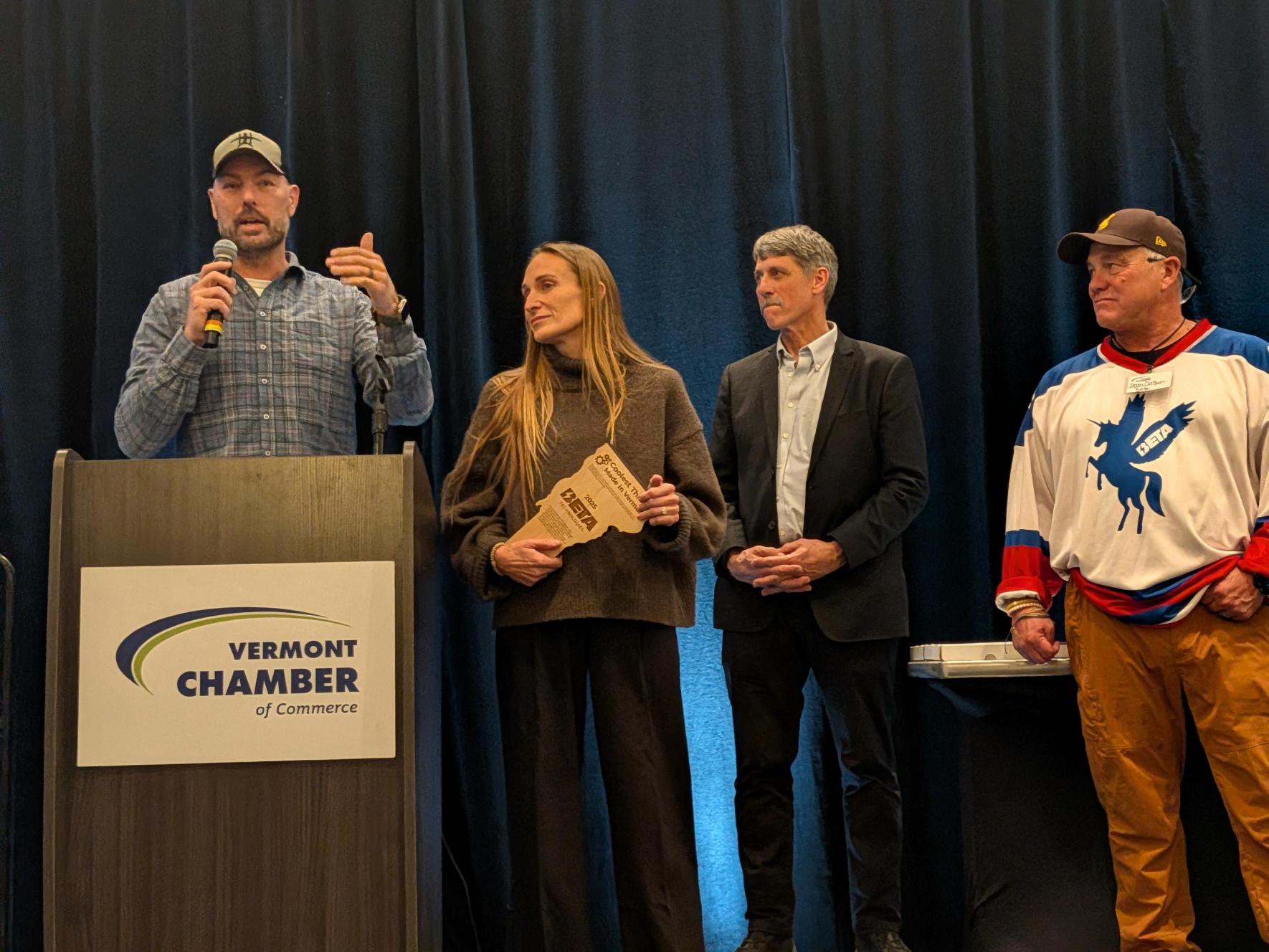
BETA Technologies’ ALIA Aircraft and Hannaford Career Center’s Tiny House on Wheels Named 2025 Winners

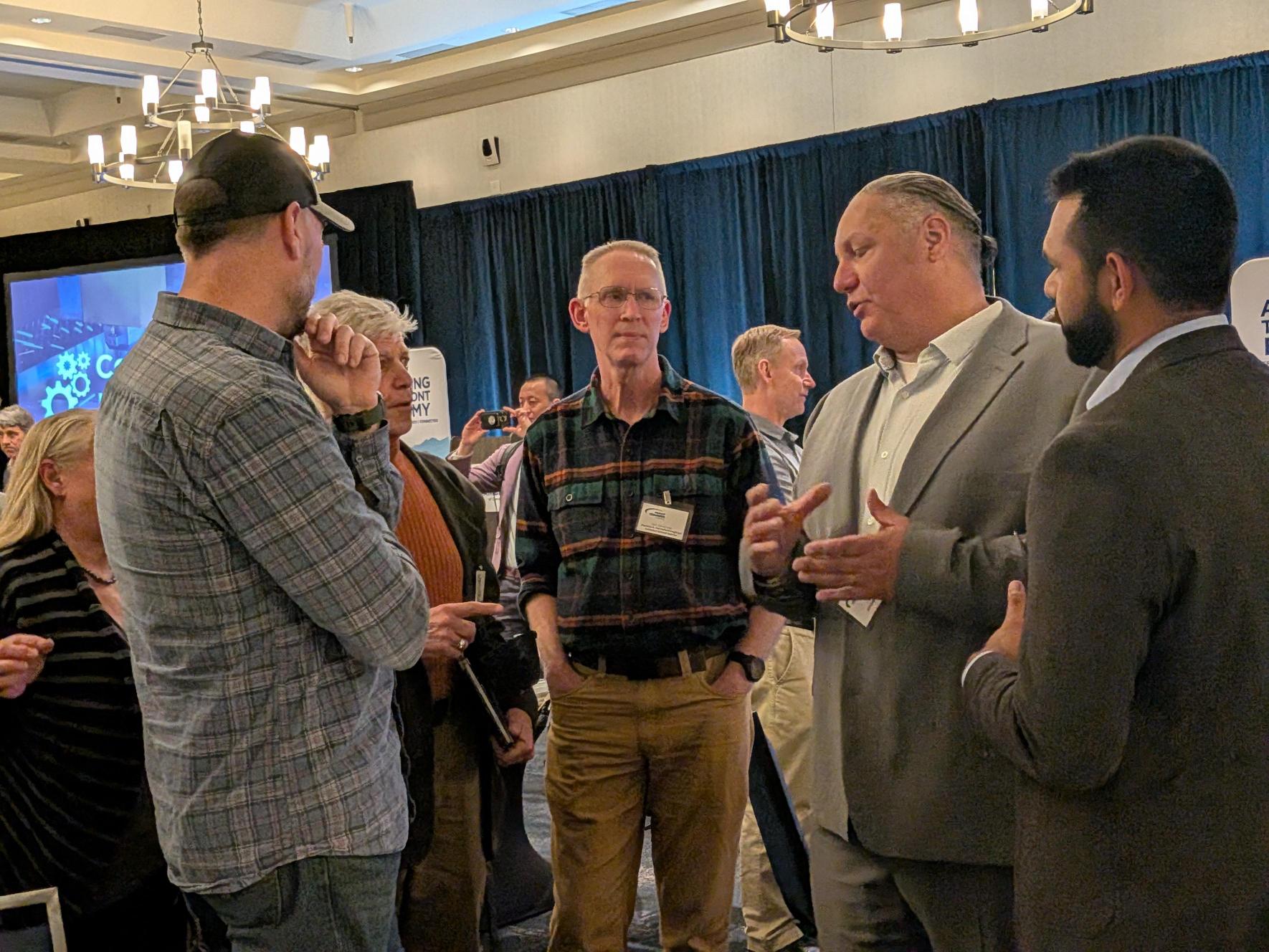
The Vermont Chamber of Commerce has announced the winners of the 2025 Coolest Thing Made in Vermont Awards, recognizing the state’s most innovative manufacturers and the next generation of technical talent. The awards were presented during the annual Vermont Manufacturing Summit, the state’s premier gathering for manufacturers from across Vermont, New England, and Canada.


2025 WINNERS
Coolest Thing Made in Vermont
BETA Technologies – ALIA Aircraft: BETA Technologies was selected for its groundbreaking all-electric ALIA aircraft, capable of both conventional takeoff and landing (CTOL) and vertical takeoff and landing (VTOL). Designed and built in Vermont, ALIA represents a fully integrated approach to the future of aviation—from advanced propulsion systems to charging infrastructure. The aircraft embodies BETA’s commitment to safety, sustainability, and innovation, reflecting the global impact of Vermont-grown manufacturing excellence.


“On behalf of our nine hundred plus member team at BETA, we are completely humbled to receive this recognition. Thank you. Katie and I grew up here and knew this is where we wanted to build our business. It took twelve years of pitching the idea of BETA before the first person said yes. At that moment, we decided our strategic advantage would be to be highly vertically integrated and to do it as sustainably as possible. These things echo our Vermont advantage. That is the advantage of thinking differently about how we do things and setting the bar high. We are thrilled to be here, doing all of that for electric aviation with our team here in Vermont,” said Kyle Clark, Chief Executive Officer of BETA Technologies.


Coolest Thing Made by a Career Technical Education or STEAM Program
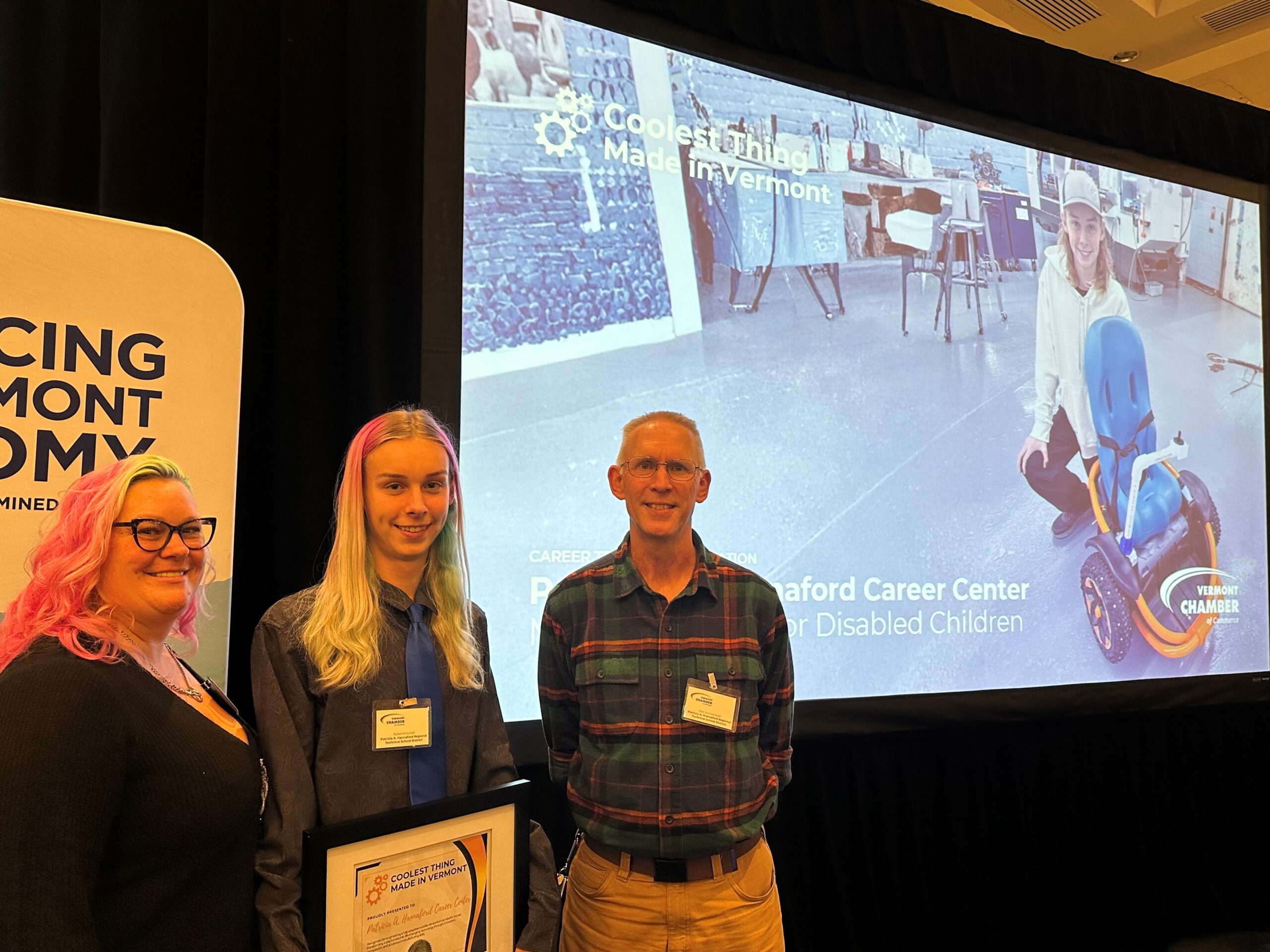
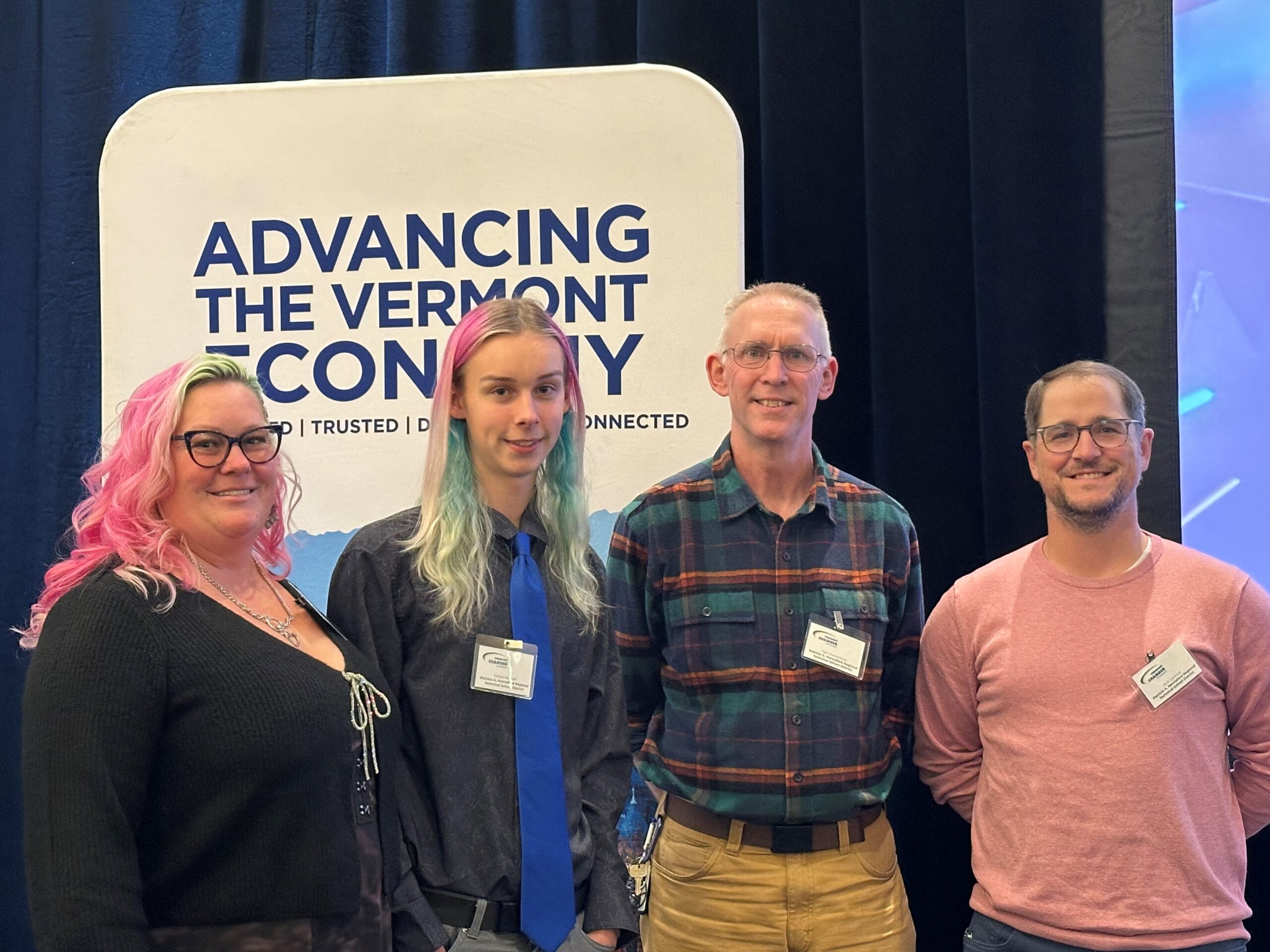
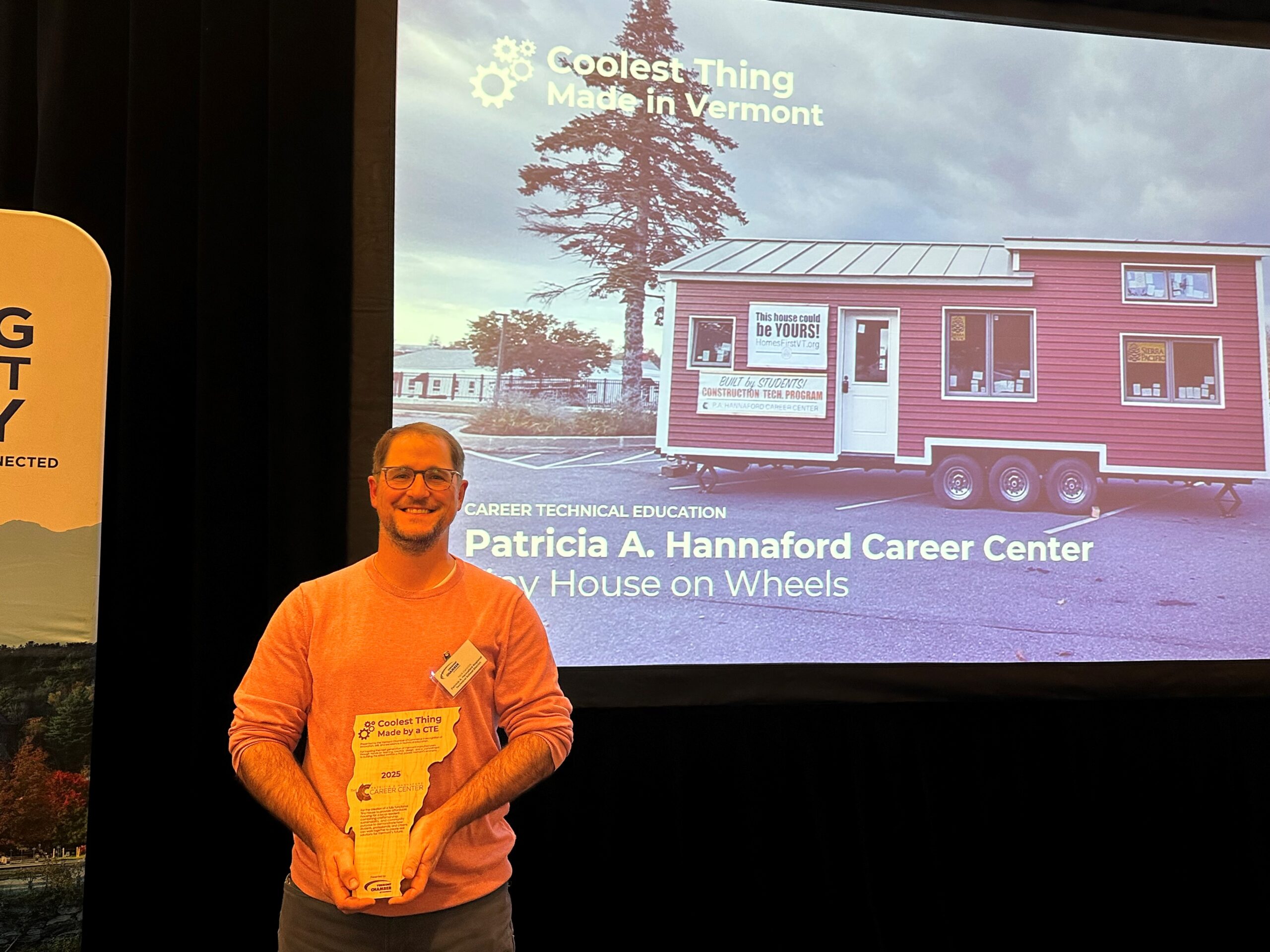
Patricia A. Hannaford Career Center – Tiny House on Wheels: Students from the Patricia A. Hannaford Career Center received top honors for designing and building a fully functional Tiny House on Wheels, crafted to provide affordable housing for a local resident. The project showcases applied learning, craftsmanship, sustainability, and the community-minded spirit that defines Vermont’s Career Technical Education programs.


“This event highlights the power of CTE in the lives of students, and the importance of CTE for Vermont. The innovation of these kids demonstrates what young people can do when given access to Career Technical Education. CTE is not just a leg up for their future goals, it is a launchpad,” said Nicole MacTavish, Ed.D., Superintendent and Director of the Patricia A. Hannaford Regional Technical School District.


More than sixty submissions were entered by manufacturers and student teams across the state, an impressive reflection of the innovation, creativity, and technical skill that fuel Vermont’s manufacturing sector. From aerospace and advanced engineering to adaptive technology and community driven housing solutions, this year’s entries highlight the sector’s powerful contributions to Vermont’s economic vitality.


“The Vermont Chamber is proud to champion Vermont’s manufacturers, industries that make living, working, and thriving in Vermont possible,” said Amy Spear, President of the Vermont Chamber of Commerce. “The Coolest Thing awards celebrate not only remarkable products, but the skilled workforce, ingenuity, and partnerships that strengthen Vermont’s economy. We are honored to recognize the leaders and students who are shaping the future of manufacturing in our state.”


FINALISTS (HONORABLE RECOGNITION)
Made in Vermont Finalists

  • Rothspeed – Splitray Supercar: A carbon-fiber reimagining of a vintage Corvette, blending classic design with advanced engineering. Built in Milton, the Splitray showcases world-class performance and the artistry of Vermont’s precision manufacturing.
  • WheelPad L3C – SuitePAD: A 200-square-foot modular bedroom and bathroom suite that can be attached to an existing home in weeks, providing accessible, dignified housing for those facing mobility challenges. SuitePAD reflects the power of design, compassion, and rural economic resilience.

Career Technical Education or STEAM Program Finalists

  • Green Mountain Robotics – “Champ”: A competitive 140-pound robot built by FRC Team #9101, demonstrating the strength of Vermont’s growing STEM talent pipeline.
  • Lyndon Institute – Bridge Barrier: A custom steel safety barrier fabricated by welding students to protect the historic 1878 Miller’s Run Covered Bridge—an example of applied learning and community stewardship.
  • North Country Career Center – Air Blow Off System: A student-engineered automated air system designed to reduce downtime and operational costs for a local manufacturer.
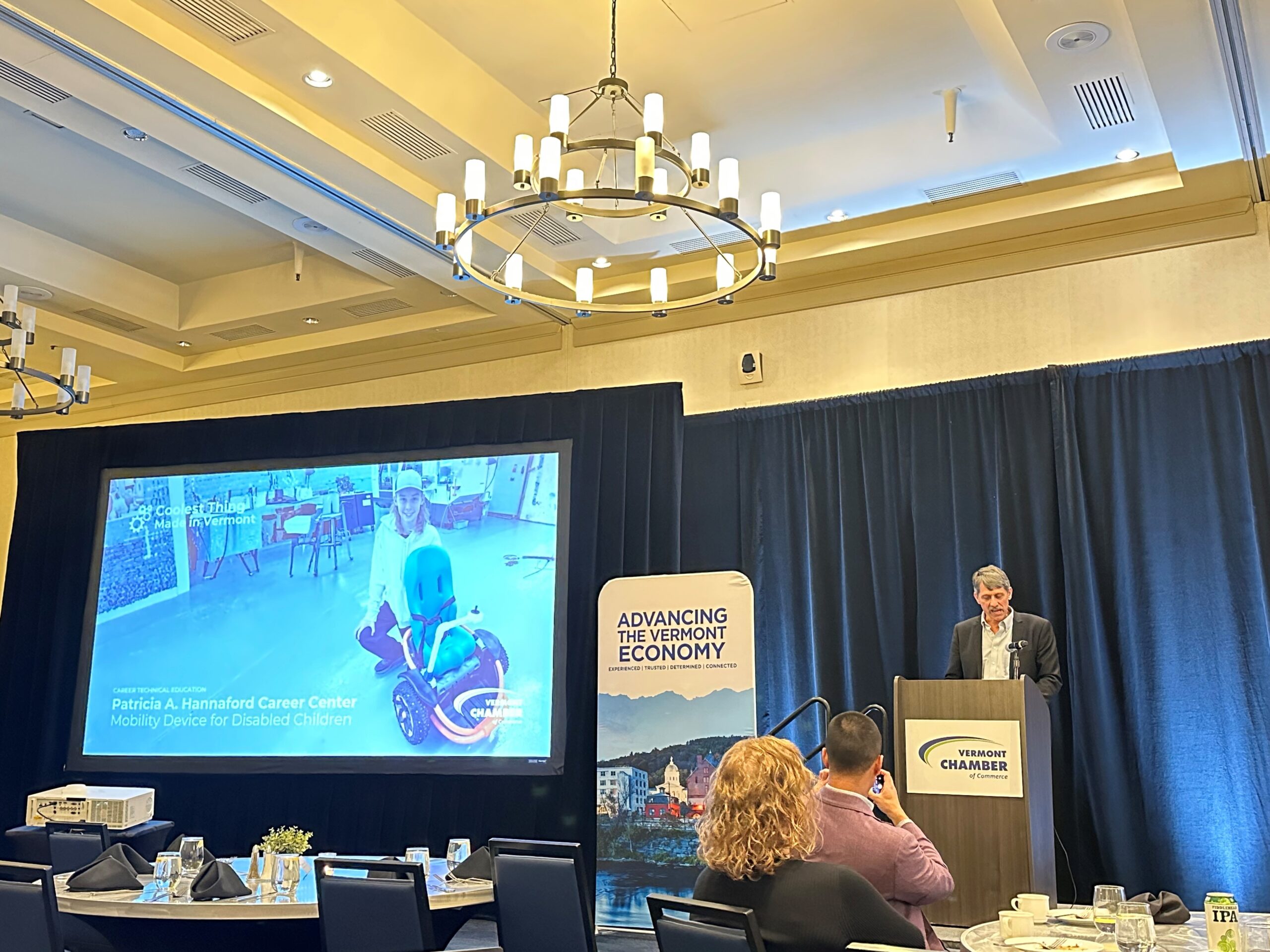
  • Patricia A. Hannaford Career Center – Mobility Device for Disabled Children: A student-created adaptive mobility device that transforms a toy car into life-changing technology for a local child.

Celebrating Vermont Manufacturers at the Summit
The Vermont Manufacturing Summit brings together leaders from across the region for two days of global supply-chain matchmaking, policy discussions, workforce innovation, and advanced manufacturing collaboration. The Coolest Thing awards are a cornerstone of the Summit, honoring both the products that strengthen Vermont’s economy today and the students and educators building tomorrow’s workforce.


“Manufacturing is one of Vermont’s most essential economic sectors,” Spear noted. “From aerospace to outdoor recreation to custom fabrication, these employers fuel statewide innovation, create high-wage jobs, and anchor communities. The Summit and the Coolest Thing awards underscore our commitment to supporting this critical sector through advocacy, community, and resources.”

SHARE THIS ARTICLE

RECENT NEWS