Vermont’s election results are setting the direction for a consequential legislative session. With new leadership taking shape in Montpelier, the Vermont Chamber of Commerce is focused on turning shared concerns about affordability into practical policies that strengthen businesses, expand opportunity, and support vibrant communities.
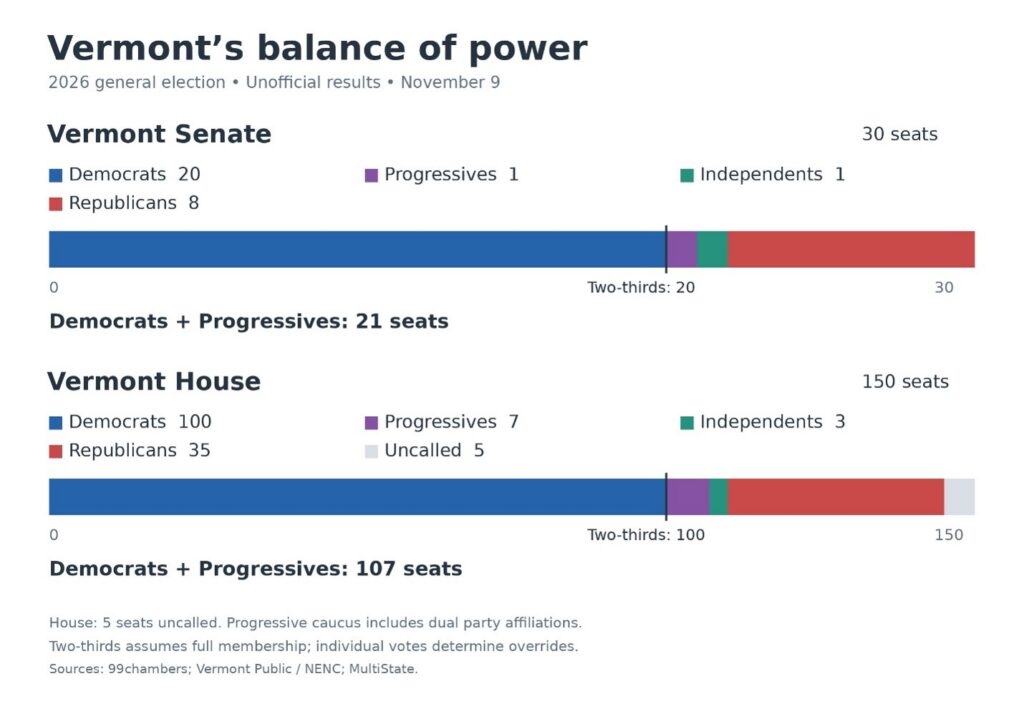
Governor Phil Scott’s reelection and the return of Democratic supermajorities in both chambers establish the political landscape for 2027. Senate Democrats have unanimously nominated Senator Andrew Perchlik to serve as the next Senate president pro tempore, subject to a full Senate vote in January. House leadership decisions are still ahead.
Senator Perchlik has identified housing, healthcare, energy affordability, and the economic viability of rural communities as priorities. He also expressed support for advancing elements of universal primary care and considering income tax changes to fund specific initiatives. These early signals bring the choices facing the incoming Legislature into clearer focus: how to deliver meaningful relief, fund essential services, and strengthen Vermont’s economic foundation.
For Vermont employers, those choices have direct consequences. The 2026 Vermont Business Climate Survey shows how healthcare costs, workforce shortages, housing constraints, and operating expenses are shaping decisions about hiring, pricing, and investment. When businesses postpone expansion, leave positions unfilled, or raise prices to absorb higher costs, the effects reach households and communities throughout the state.
Addressing these pressures will require affordability and fiscal stewardship to guide legislative decisions. Proposals should be evaluated for their full costs, implementation requirements, and measurable outcomes, including their effects on employers’ ability to sustain jobs and invest in Vermont. Healthcare reform must address the drivers of costs. Education funding decisions must connect sustainable spending with strong outcomes. Tax policy must account for Vermont’s competitiveness and the businesses and working Vermonters supporting essential public services.
Vermont also needs a sustained commitment to growth. The Vermont Economic Action Plan provides a blueprint for expanding the workforce, increasing housing availability, and strengthening the communities where people live and work. Advancing that vision means creating more homes, improving permitting predictability, and making it easier for businesses to invest and grow. These are essential steps toward an affordable and abundant Vermont.
Leadership transitions and new committee assignments make engagement before the session especially important. As lawmakers establish their agendas, the Vermont Chamber is connecting with returning and newly elected legislators to share business perspectives, provide economic analysis, and identify opportunities for progress. Our experienced government affairs team will work across party lines and with partners statewide to advance a proactive, cost-conscious legislative agenda.
Business participation strengthens that work. Members can help by sharing specific examples of how policy decisions affect their operations and what would enable them to hire, invest, and grow. Connecting those experiences with economic data helps lawmakers understand the practical consequences of their decisions and develop more effective solutions.
The election has determined who will govern. The work ahead will determine how Vermont moves forward. The Vermont Chamber will bring the experience, relationships, and policy leadership needed to keep affordability, competitiveness, and economic opportunity at the center of that work.