Business Leaders Testify on Liquor Liability Insurance Concerns

Business Leaders Testify on Liquor Liability Insurance Concerns

To address liquor liability insurance concerns, the Vermont Chamber and Vermont Independent Restaurants (VTIR) are advocating for H.288, legislation that would amend the statutes governing liability for the sale of alcoholic beverages. Vermont’s statutes, which have not been amended since 1987, make Vermont an outlier and undesirable state to insure in. VTIR leadership members Chris Karr of the Killington-based Karr Group and Alex Crothers of Higher Ground testified that if this issue is not addressed urgently, their businesses are at risk of becoming inoperable in Vermont. 

The Vermont Chamber also provided testimony to amend the statute. Specifically, by updating Vermont’s dram shop laws to be in line with neighboring control states such as Maine, and to also remove the landlord from the chain of liability. The current chain of liability includes the server, the business owner, and the landlord.  

SHARE THIS ARTICLE

RECENT NEWS

Significant Solutions Proposed in Housing Omnibus Bill to Address Business Concerns

Significant Solutions Proposed in Housing Omnibus Bill to Address Business Concerns

In December, the Vermont Chamber hosted a business roundtable with Senator Ram Hinsdale on the need to make housing the top priority this session. As Chair of the committee tasked with crafting a housing omnibus bill, Ram Hinsdale has since championed the needs of businesses. Over the last eight weeks, the committee took testimony from over 100 Vermonters to craft a bill that would make meaningful progress on Vermont’s housing crisis. The Committee unanimously voted out S.100, the “HOME” bill, which thoughtfully addresses many of the areas that the Vermont Chamber has advocating for. However, the bill is now expected to have an uphill battle in the Senate Natural Resources Committee, which has historically opposed removing the barriers that exist to building housing.  

In an op-ed earlier this session, the Vermont Chamber advocated for legislative action in four areas. Highlights of S.100 are categorized into each of these areas: 

Breaking down Barriers 

  • Limits municipal regulations on issues like parking, single-family zoning, ADUs, number of units per acre, height limitations. 
  • Removes the ability for 10 people to appeal a decision of the municipal administrative officer. 
  • Allows municipal administrative offices to approve subdivisions. 
  • Removes the character of an area as a subject of an appeal. 
  • Increases the trigger for Act 250 from 10 units in 5 years, within 5 miles, to 25 units in 5 years, within 5 miles in a designated area. 

Strategic Investment 

  • $20 million for the Missing Middle Income Homeownership Program 
  • $20 million for the Middle-Income Rental Housing Program 
  • $20 million for the Vermont Rental Housing Improvement Program 
  • $25 million for the Vermont Housing and Conservation Board 

Public Private Partnership 

  • Creates opportunities for employers to invest in workforce housing developments through the Middle-Income Rental Housing program. 

Collects Data 

  • Does not contain a rental registry. 
  • Instructs auditors from the State Office of the Auditor or a third-party auditing firm to conduct an audit of the residential housing development and approval process and identify measures and policy changes that will improve the timeliness of residential housing development. 

SHARE THIS ARTICLE

RECENT NEWS

Legislative Intern Spotlight: Jeremy Little

Legislative Intern Spotlight: Jeremy Little

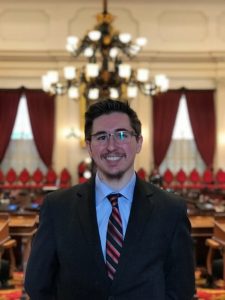
Name:  Jeremy Little 

College: Saint Michael’s College 

Field of Study: Political Science Major, Economics Minor, Spanish Minor

Anticipated Graduation: May 2023 

Hometown: Georgia, VT 

“In this internship, I’m excited to get to know how everything works at the State House. So far, I’ve been lucky to be introduced to many great people who spend their time at the State House, both legislators, lobbyists, and many others. Some of the skills I am developing through this internship include an innate understanding of the legislative process, issues facing Vermonters, and of how the various bills proposed will affect businesses and individuals.  

After graduating, I plan to stay in Vermont and work as a summer canvasser. Following this, I hope to find employment in the fall at a job either directly or indirectly involved in politics within Vermont. At some point, I plan to return to college for a graduate degree in public or environmental policy.  

I look forward to the opportunity to connect. Please reach out if you would like to speak further. This internship is a great opportunity for me, and I welcome the opportunity to deepen my connection with Vermont and with its inner mechanisms.” 

Contact Information:  
Email – 19jslsbhs@gmail.com 

The 2023 Legislative Monitoring Collaborative is made possible by the support of the National Life Group: 

SHARE THIS ARTICLE

RECENT NEWS

Action Required to Address Liquor Liability Insurance Concerns

Action Required to Address Liquor Liability Insurance Concerns

A bill has been introduced to address the issue of why it is so costly, or not possible, for licensees to obtain liquor liability insurance in Vermont. With the help of the House Speaker, this issue has received timely attention. The Vermont Chamber and VTIR will be advocating for legislation that updates state dram shop laws to be in line with neighboring control states. Specifically, by amending the statute so that liability is established on negligence and landlords are removed from the chain of liability in the unlawful sale of alcoholic beverages. Vermont ranks with Alabama as the two worst states for liquor liability insurance.  

Currently, Vermont is an outlier because liability is established on a strict basis and includes the server, owner, and landlord. H.288 proposes to amend the statutes on liability for the sale of alcoholic beverages to reduce the scope of liability and limit the persons who may be subject to an action for damages that result from an unlawful sale of alcoholic beverages. These changes would ensure Vermont businesses do not have to pay exorbitant rates, or, become uninsurable. Initial testimony on this issue was taken by the House Government Operations and Military Affairs Committee.

SHARE THIS ARTICLE

RECENT NEWS

12 Weeks Paid Family and Medical Leave Bill Voted Out of Committee With 100% Wage Replacement Mandated for All Businesses

12 Weeks Paid Family and Medical Leave Bill Voted Out of Committee With 100% Wage Replacement Mandated for All Businesses

The House General and Housing Committee voted 9-3-0 in support of H.66, with the three Republican legislators all voting against the paid family and medical leave (PFML) legislation. As the policy committee of jurisdiction, the committee has tackled challenging and complicated conversations in recent weeks concerning how this extensive new mandated benefits program would work. However, many questions remain unanswered and the contrast between paid leave legislation crafted in 2019 is stark. 

Multiple aspects of the current bill were reviewed and altered at the suggestion of the Vermont Chamber, including a further definition of “personal bond” regarding familial relationships that require care to qualify for benefits. The removal of refund payments to employees making under $25,000 in wages was also addressed. However, the legislation still aims to create the most expansive PFML program in the nation and relies on the State Treasurer to create a new insurance program rather than working with the already established private insurer. This is opposite to the precedent set by other states that have created PFML programs. The cost and effort that this would take are largely guesswork and likely to be staggering. The legislation will now be reviewed by the House Ways and Means Committee. 

FMLI Passed in 2019 PFML Proposal 2023
Administration

Vermont Department of Financial Regulation (DFR) will issue a Request for Proposals to select an insurance carrier to run a program.

The Vermont Department of Labor will write rules regarding the appeals process, carry out marketing, and handle appeals that come to the State

The Vermont Department of Taxes will collect and remit to the FMLI Special Fund

The Vermont Treasurer’s Office will be appropriated between $20 and $80 million to double its size to start a new Division of Family and Medical Leave.

DFR will evaluate employers' plans to decide if they are of equal benefit to the state plan to provide an avenue to leave the state plan

The Department of Taxes will collect new revenue from a payroll tax and remit to a special fund

Benefit Design

90% of an employee’s average weekly wage up to 55% of the Statewide Average Weekly Wage and 55% of an employee’s average weekly wage more than that amount

Maximum weekly benefit amount is the Vermont Average Weekly Wage

100% of employee’s average weekly wage up to a maximum of the Statewide Average Weekly Wage
Eligibility Those that earn the dollar equivalent of 675 hours at minimum wage

Employed with the same employer for six months for an average of 20 hours per week

Or, is employed and during two of the last four completed calendar quarters has received payments for services for which the employer is required to withhold Vermont income tax

Employer Size Number of employees to be considered a covered employer was reduced from 15 to 10 “Any person employing one or more individuals in Vermont”

An elaborated breakdown of the differences between paid leave legislation from 2019 and the current bill is available, here, and was provided as testimony from our partners at the Lake Champlain Chamber of Commerce. 

SHARE THIS ARTICLE

RECENT NEWS

Funding Secured for Housing in Budget Adjustment

Funding Secured for Housing in Budget Adjustment

The Senate Appropriations Committee amended the Budget Adjustment Act to include $14 million of funding from the American Rescue Plan Act (ARPA) and the general fund for the Missing Middle-Income Homeownership Development Pilot Program. The Vermont Chamber’s advocacy was essential to the establishment of the program and is a champion for solutions that increase the number of housing units statewide as a solution workforce shortage solution.  

This funding allocates $5 million of ARPA funding for FY22, $10 million of ARPA funding for FY23, and $9 million of general funding for FY23. Additional investments championed by Vermont Chamber that received funding were the Rural Infrastructure Assistance Program, Vermont Housing Improvement Program, and The State Refugee Office.

SHARE THIS ARTICLE

RECENT NEWS

Elevating Vermont’s Achievements to Recruit and Retain Talent

Elevating Vermont’s Achievements to Recruit and Retain Talent

With only 30% of jobs requiring a four-year degree, the Vermont Chamber testified on the need for a targeted program to recruit in-demand workers like nurses, line workers, CDL drivers, and other trade professionals to live and work in Vermont. By elevating Vermont’s achievements, workers who want the security and quality of life Vermont has to offer will know the opportunities available to them, and be encouraged to move here.  

The Vermont Chamber is urging legislators to leverage their success with a sustained multi-year investment to expand the Vermont image beyond a travel destination and to also promote the state as an attractive place to move full-time. A strategic plan is required to accomplish this goal and communicate the qualities that make the state an attractive place to live and work, such as Vermont’s climate commitments, career advancement opportunities, social justice and equity leadership, and childcare and housing investments. This is a workforce shortage solution that the Vermont Chamber will continue to advocate for throughout the session.  

SHARE THIS ARTICLE

RECENT NEWS

Collective Impact of Major Proposals Must be Central to Funding Discussions

Collective Impact of Major Proposals Must be Central to Funding Discussions

The Vermont Chamber is continuing to urge legislators to consider the collective impact of proposals on Vermont businesses when evaluating funding sources for new revenue streams. Testimony this week encouraged the Senate Finance Committee to consider the inability of employers to fund multiple major investments in new paid family and medical leave and childcare proposals without putting the success of their business, and their communities, at risk. 

In response, committee members acknowledged the substantial number of priorities in discussion this session. Sen. Ann Cummings, chair of the committee, assured they would take a realistic approach and “tack them all on the board and look at all possible ways to fund them” once bills reach their committee. Eli Lesser-Goldsmith of Healthy Living testified in support of prioritizing issues to ensure sustainable implementation and cautioned implementing multiple major investments requiring new revenue streams this session. As bills begin to move into money committees, the Vermont Chamber will continue to advocate for pragmatic decision-making.  

SHARE THIS ARTICLE

RECENT NEWS

Vermont Chamber Supports Continued Health Care Savings for Small Business

Vermont Chamber Supports Continued Health Care Savings for Small Business

S.54 will keep the small group and individual markets separate for the duration of the federal premium tax credit expansion through 2025. The Vermont Chamber, a successful leader on this issue, continues to support keeping the small group market separated from the individual market, and while the issue is momentarily addressed, cost-shifting questions beyond the next few years remain to be addressed. 

In testimony, the Vermont Chamber reminded members of the Senate Finance Committee that the small group market represents only 6% of the overall health insurance landscape. Amid economic uncertainty, legislators were also asked to consider the small business financial implications of re-merging the market and to work towards a plan that ensures they are not burdened with the full cost of holding the individual market harmless in 2025.   

SHARE THIS ARTICLE

RECENT NEWS

Data Privacy Proposal Could Result in Unintended Consequences on Small Business

Data Privacy Proposal Could Result in Unintended Consequences on Small Business

A data privacy bill that could cause costly and superfluous lawsuits against businesses is under consideration in the House Commerce and Economic Development Committee. As this proposal progresses, the Vermont Chamber will work to ensure the legislature has a comprehensive understanding of the potential impacts on the Vermont business community. Our advocacy will encourage legislators to thoroughly study and understand this complex issue and consider legislation passed in other states in which data privacy laws balance the protection of consumer privacy with manageable regulation on businesses.  

Attorney General Charity Clark testified on the need for data privacy legislation to give the Attorney General’s Office grounds for enforcement. Clark acknowledged concerns shared by the Vermont Chamber, that compliance for small companies could be very difficult, time-consuming, and costly. The Chamber has additional concerns that companies that own data will not be able to use it for purposes such as targeted advertising. Other business representatives have requested exemptions for financial institutions, healthcare research companies, and companies covered by HIPAA, or a working group to study the issue before making legislative changes. 

SHARE THIS ARTICLE

RECENT NEWS