
Bill Updates

Bill Updates
  • H.715 Clean Heat Standard: The House passed the Clean Heat Standard (H.715) by a vote of 96 to 44. If the Senate passes H.715 with a two-thirds majority, the measure could become law even if Governor Scott issues a veto. An effort by Rep. Harrison, Rep. Fagan and Rep. Murphy to require the Legislature to review the program design before it is implemented failed by a vote of 44 to 96. Learn more at https://www.vermontfuel.com/chs/.
  • H.329 Discrimination: This bill has stalled in the House General, Housing, and Military Affairs Committee after receiving testimony on the impact this would have in school settings. New bill language has been proposed, but missed crossover. It will need to be incorporated into a bill previously passed by the Senate in order to pass this biennium.
  • H.730 Liquor Law Modernization: The bill was passed favorably out of the House Ways and Means Committee with amendment and will now move to the House floor. If enacted, both fortified wines and low alcohol spirit-based beverages (known as ready-to-drink cocktails) would be permitted to be sold via retail outlets and beverage wholesalers, providing greater access to products for both licensees and consumers. The bill also contains several other modernization provisions and technical changes put forward by the Administration.
  • S.53 Corporate Income Tax and Military Pensions: The bill was passed favorably by the Senate and will now be reviewed by a conference committee of House and Senate members. The House and Senate committees of jurisdiction took drastically different approaches to changes in the corporate income tax modernization proposals and reconciliation between these two bodies may be challenging.

Chemical Regulation Without Insurance Puts Manufacturers at Risk

Chemical Regulation Without Insurance Puts Manufacturers at Risk

The Vermont Chamber testified in the House Judiciary Committee on S.113, a bill that proposes a cause of action for the remedy of medical monitoring for a person exposed to a proven toxic substance. The bill, as passed by the Senate, includes the Vermont Chamber’s recommendations from prior testimony in the Senate Judiciary Committee and an appropriate legal test for the remedy of awarding medical monitoring. The Vermont Chamber still has concerns regarding the insurance market and encouraged the Committee to hear from the Vermont Department of Financial Regulation on whether medical monitoring insurance can be written for Vermont companies. If not, several scenarios could disrupt the insurance markets, further impact our supply chains and economy, and subject manufacturers to significant risks and costs. To learn more, please contact Chris Carrigan

Expanding Manufacturing Tax Exemption Would Modernize Tax Law

Expanding Manufacturing Tax Exemption Would Modernize Tax Law

The Vermont Chamber testified in the Senate Finance Committee on H.437, a bill that includes a proposal to expand the manufacturing tax exemption. The Vermont Chamber supports this change, as it will modernize Vermont’s tax law, enhance workforce recruitment, retention, and upskilling efforts, modernize facilities, and make Vermont competitive with the 33 other states that have similar exemptions in place. The Vermont Chamber strongly supports the expansion of the manufacturing tax exemption to help manufacturers dealing with a severe workforce labor shortage. To learn more, please contact Chris Carrigan.  

A Housing Vacancy Problem vs. A Housing Availability Crisis

A Housing Vacancy Problem vs. A Housing Availability Crisis

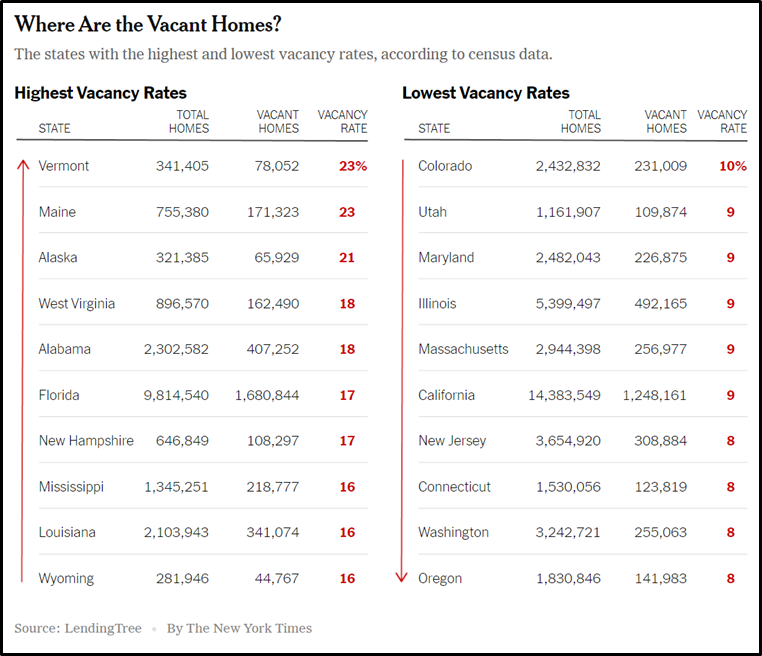
Vermont currently has the highest rate of vacant homes in the nation. This census data comes as we are facing a workforce housing crisis. Two important questions need to be answered this legislative session: why does Vermont have so many vacant housing units, and how do we guarantee that the millions being invested in housing by the State this year are safeguarded to ensure the funding goes towards solving the housing crisis for working Vermonters? Some of these safeguards are already in the Omnibus Housing bill’s Missing Middle Homeownership Development Program and the Vermont Rental Housing Incentive Program, an important part of the Vermont Chamber’s testimony to the Senate Economic Development, Housing and General Affairs Committee.

The Omnibus Housing bill was voted favorably out of the Senate Finance Committee and Senate Appropriations this week, after a change moved the Downtown Tax Credits into a bill where other tax credits will be under consideration. The Vermont Chamber will be advocating to keep the housing programs that focus on increasing the supply of workforce housing fully funded.

Workforce Development Bill Draws Out Crossover

Workforce Development Bill Draws Out Crossover

The House workforce development bill made the rounds through the House this week, with committees weighing in by offering amendments to tweak the bill before it goes to the Senate. The Joint Fiscal Office released its fiscal summary of the bill, totaling $105.7 million without an expected impact on State revenues. This includes $44.5 million from the General Fund, $44.8 million in Global Commitment Fund, $15 million from the Education Fund, and $1.3 million of ARPA funding. The House Appropriations Committee is expected to mark up the bill soon, potentially making significant cuts. The Vermont Chamber will continue advocating for the programs that will grow the workforce.

Meanwhile, at the federal level the Vermont Chamber is continuing to advocate for solutions to the workforce shortage. Congressman Welch has been a great partner in this effort, signing on to a congressional letter to the Secretaries of Homeland Security and Labor, requesting the total number of allowable H-2B visas be released in order to alleviate the labor shortage. In addition, the Vermont Chamber is continuing to advocate for RRF replenishment in future COVID-19 relief bills or a small business relief package, and Congressman Welch signed on to a letter to House leadership in support of additional federal relief funding for small businesses.

Business Grants Get Thrown a Curveball with New Bill

Business Grants Get Thrown a Curveball with New Bill

The Vermont Chamber worked closely with the Senate Economic Development, Housing, and General Affairs Committee, ACCD, and VEDA, to come up with a workable solution to the problems in the economic recovery grant program. However, the most recent iteration of language in H.159 is extremely concerning. The program’s original intent was to help small businesses recover from losses they experienced due to the COVID-19 pandemic. The language now seems to change the intent to “support Vermont businesses experiencing continued working capital shortfalls.” With this additional layer of scrutiny, it seems businesses may be required to demonstrate not only past losses, but continued impact, effectively excluding seasonal businesses heading into their busiest time of year. The maximum loan amount has also been lowered to only $150,000, raising concerns of small business closures if operators cannot make up enough of their shortfall to stay in business. The Vermont Chamber worked to have the program criteria be based on operating costs rather than fixed costs and will be bringing these issues before the Committee as they continue to take testimony on this bill next week. To share how this program would impact your business, please contact Amelia Seman.

New Economic Development Bill Introduces a Host of New Problems

New Economic Development Bill Introduces a Host of New Problems

The Senate economic development bill missed the crossover deadline for bills to move from one chamber to the other. Many of the bill’s proposals have been combined into H.159, which previously passed the House and is now in Senate. While the new language retains several key Vermont Chamber priorities, such as the new relocating employee incentives, the regional recruitment and relocation network, and project-based TIF, it made significant changes to the COVID-19-related paid leave grant program, as well as the VEDA forgivable loans. The COVID-19 paid leave grant program is intended to provide grants to reimburse employers who paid employees for COVID-19 related sick time taken beyond the employee’s accrued sick time. The legislation instructs the Secretary of Administration to adopt procedures and processes to allow employers to certify the amount of paid leave provided for COVID-19 related reasons, and a process to allow employers to report on their use of the grant funds awarded.

The Vermont Chamber has raised concerns about what this certification will entail and how onerous it will be to provide documentation on employee paid time off taken months ago. Certification and documentation have received heavy scrutiny in previous business grant programs and outlining those expectations in statute will be important to ensure business owners are able to easily and appropriately access funds without reprisal in the future.

Vermont Chamber Launches New Podcast Series (Ep.1: “State to Main” – Workforce Housing)

Vermont Chamber Launches New Podcast Series (Ep.1: “State to Main” - Workforce Housing)

The Vermont Chamber of Commerce launched a new policy-focused podcast series entitled, “State to Main.” The series complements the widely read weekly legislative newsletter of the same name.

In the months ahead, “State to Main” will cover several topics important to the Vermont business community, including housing, the workforce shortage, and career and technical education. Each episode features a unique pairing of a Vermont Chamber policy advocate and a business leader to discuss the impact of these issues on Vermont businesses. Episodes will focus on the role of each issue in combatting the statewide workforce shortage and are analyzed in a pandemic recovery context.

“Vermont’s economic success depends on the innovation of our businesses and strength of our workforce,” said Vermont Chamber President Betsy Bishop. “The intent of this series is to highlight areas where businesses need policy support to achieve economic recovery.”

The pilot episode, “Workforce Housing,” features Megan Sullivan, VP of Government Affairs for the Vermont Chamber, and Annemarie Todd, VP of Human Resources for Sugarbush Resort. Sullivan and Todd address the impact of the current housing market on employee recruitment and retention efforts, and the heightened responsibility felt by employers to facilitate suitable accommodations for their workforce. Policy opportunities are identified to address the immediate need for middle-income housing.

Episodes are available to stream online via  Spotify, Apple Podcasts, Soundcloud and on the Vermont Chamber of Commerce website.

“State to Main” is made possible by our sponsor, AT&T.

Bill Updates

Bill Updates
  • H.483 CTE Funding: This bill requires the Agency of Education to develop an implementation plan to change the funding and governance models that hamper CTE schools’ ability to attract students to their programs. The final report will be issued in July 2023, essentially delaying any action for two years on this critical proposal. The Vermont Chamber is working to expedite the report so this can be addressed in the next legislative action.
  • H.492 Natural Resources Board: House Natural Resources, Fish and Wildlife Committee passed the bill to change the structure of the Natural Resources Board creating a 5-member Environmental Review Board to hear appeals rather than the Environmental Division of the Superior Court. The bill will be voted on by the full House before consideration by the Senate.
  • S.284 Changes to Act 250: Senate Natural Recourses Fish & Wildlife passed S.284 with housing and permit updates to the Neighborhood Development Areas and Priority Housing Projects. This will impact the similar proposals in the current version of S.226 as Priority Housing Projects fall under Act 250, not housing jurisdiction. S.284 also contains language that would create a new Act 250 Road Rule, a provision the Administration has made clear they would not support.
  • Clean Heat Standard: The House Energy Committee approved a Clean Heat Standard by a vote of 7-2 on Thursday afternoon. Go to vermontfuel.com/chs for answers to frequently asked questions about the CHS.
  • Burlington Charter Change: The House approved a Burlington charter change that would allow Vermont’s largest city to enact a ban on oil and gas heating in new construction and a tax on anyone that refuses switch over to the city owned electric utility. The legislation passed 98-49 and next goes to the Senate. Go to vermontfuel.com/burnerban/ to learn more.

Liquor Law Modernization

Liquor Law Modernization

The Committee on General, Housing & Military Affairs reviewed a committee bill which contains a number of provisions to modernize Vermont’s liquor laws, many of which were discussed last year but didn’t pass due to time constraints. If passed, both fortified wines and low alcohol spirit-based beverages (also known as ready-to-drink cocktails) would be permitted to be sold via retail outlets and beverage wholesalers. This omnibus bill also includes several technical corrections put forth by the Administration. Conversations are set continue after crossover.