At the Vermont Solutions Summit, business leaders, policymakers, and community partners examined how healthcare affordability is affecting employers and employees.
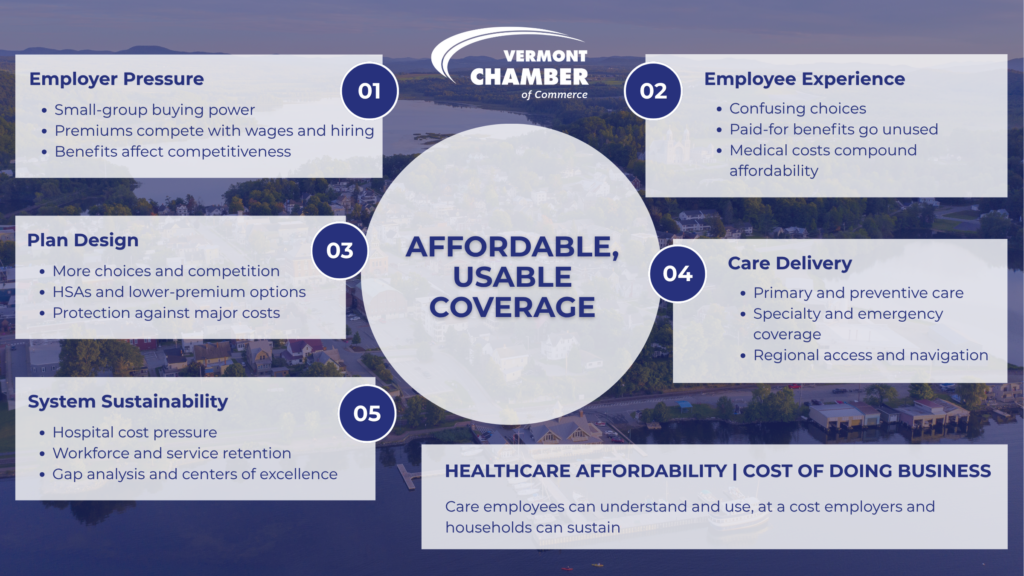
For employers, healthcare is no longer simply a benefits issue. It is increasingly connected to wages, workforce, and competitiveness. Small employers described the difficulty of competing with the purchasing power available to larger groups, while rising premiums can absorb resources that might otherwise support wages, hiring, or investment.
Affordability was only part of the conversation. Participants discussed employees’ declining coverage they do not understand and the need for more choices at different price points, including access to primary and preventive care. At the same time, lower premiums cannot be the only measure of success. Network adequacy, regional access, quality, and provider stability all affect whether coverage works when employees need care.
Complexity adds another challenge. Making coverage easier for employees to understand and use can help them make better use of the benefits already available to them, while hospitals face pressure to reduce costs, retain staff, and preserve services.
Heading into 2027, the discussion emphasized looking at the total cost carried by employers and households, not simply where that cost appears within the system. Participants identified small-group purchasing power, the range and clarity of coverage options, primary and preventive care, regional access, and hospital sustainability as interconnected considerations. The economic objective is coverage that employees can understand and use, and that employers can continue to offer.

 Megan Sullivan