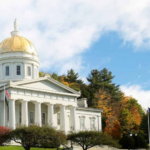
Primary Election Results Begin to Shape the Coming Biennium
Vermont’s primary elections offered an early look at the political landscape taking shape for 2027. Most incumbents advanced, while several candidates with previous legislative or statewide experience also secured nominations.
At the same time, legislative retirements will guarantee new leadership next biennium, creating a balance of institutional knowledge and new perspectives.
Economist and political newcomer Amanda Janoo won the Democratic gubernatorial nomination following a highly competitive primary and will challenge Governor Phil Scott in November.
Janoo campaigned in part on reducing Vermont’s reliance on federal funding and supporting increased taxes on higher-income earners. Tax policy and Vermont’s economic competitiveness are likely to remain central issues in the general election and the next legislative session.
Federal funding uncertainty will remain a significant challenge for the next governor and Legislature. The central question will be how Vermont maintains essential services and fiscal sustainability without adding to the affordability pressures already affecting residents and employers.
Former Lieutenant Governor Molly Gray won the Democratic nomination for lieutenant governor and will face Lieutenant Governor John Rodgers in the general election. The race may take on added significance as several competitive Senate contests could influence the balance and dynamics of the next chamber.
Legislative primaries also provided additional clarity in districts experiencing turnover:
- Chittenden Central: Nikhil Goyal secured a Democratic nomination alongside Senators Martine Gulick and Tanya Vyhovsky for the seat being vacated by retiring Senator Phil Baruth.
- Orange County: Representative Monique Priestley won the Democratic nomination and will challenge incumbent Senator John Benson.
- Windsor County: Representative Elizabeth Burrows secured a Democratic nomination for the seat being vacated by retiring Senator Alison Clarkson.
- Addison County: Senator Ruth Hardy and Democratic nominee Hannah Sessions advanced from the Democratic primary, while incumbent Senator Steven Heffernan secured a Republican nomination.
Why the Elections Matter to Vermont Businesses
For Vermont employers, the implications reach well beyond party balance.
The next Legislature will inherit unresolved questions involving education affordability, taxes, housing, workforce development, health care costs, permitting, federal funding, and economic competitiveness. These issues influence whether businesses can hire, invest, expand, provide competitive benefits, and remain in Vermont.
Retirements will reshape the membership and leadership of key legislative committees. At the same time, the success of many incumbents and candidates with prior government experience could provide continuity on issues requiring significant follow-through.
That continuity matters. Considerable work has gone into developing major reforms and economic strategies, including changes to education governance and finance, health care affordability measures, housing and permitting reforms, and the Vermont Economic Action Plan.
The next biennium presents an opportunity to move from documenting Vermont’s challenges to disciplined implementation and measurable results.
The Vermont Chamber can build on established relationships with returning policymakers while developing productive connections with newly elected legislators. Our approach will remain constructive, nonpartisan, and centered on solutions that strengthen affordability, predictability, and Vermont’s long-term economic vitality.
Much remains unsettled before November. Competitive statewide and legislative races will determine the final composition of the next Legislature and statewide offices and influence which issues receive early attention in 2027.
Regardless of the outcome, the Vermont Chamber will be prepared to work across parties with returning and newly elected policymakers. Our 2027 legislative agenda will be informed by the Vermont Economic Action Plan, the Economic Competitiveness Dashboard, the Vermont Business Climate Survey, and the direct experience of employers across the state.
Together, these resources will help move Vermont from planning to policy to action and advance solutions that make the state a more affordable and competitive place to live, work, and grow a business.
CONNECT WITH OUR GOVERNMENT AFFAIRS TEAM
 Jeremy Little
Policy and Outreach Associate
Environment and Energy, Healthcare, Manufacturing, Transportation